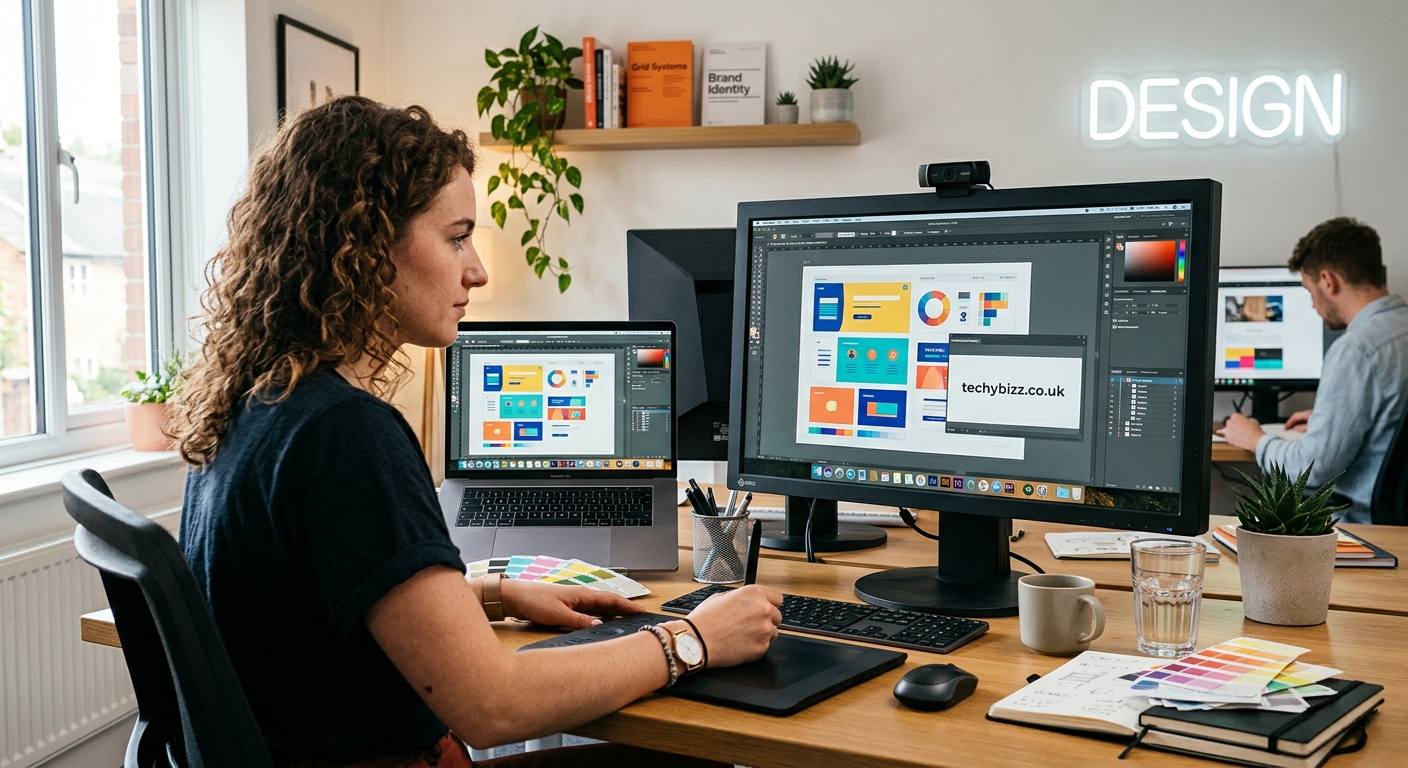
In today’s digital-first business environment, visual communication plays an important role in how people recognize, understand, and remember a brand. Graphic design services help businesses transform ideas, information, and messages into attractive visual content that can be used across websites, social media, advertising, packaging, presentations, and printed materials. From a small startup creating its first logo to an established company refreshing its entire visual identity, professional design can support many different business goals.
Graphic design is more than simply making something look attractive. Effective design combines typography, color, images, spacing, layout, and branding principles to communicate a specific message. When these elements work together, they can make information easier to understand while creating a consistent identity across different marketing channels.
What Are Graphic Design Services?
Graphic design services refer to professional solutions that involve creating visual materials for businesses, organizations, individuals, and marketing campaigns. Designers use creative concepts and digital tools to develop graphics that communicate a particular idea or support a specific business objective.
These services can include logo design, brand identity, social media graphics, website visuals, brochures, flyers, packaging design, advertisements, presentations, illustrations, and infographics. The exact service depends on the needs of the client and the platform where the design will be used.
Professional graphic designers typically consider the target audience, brand personality, communication goals, technical specifications, and intended use before creating a design. This approach helps ensure that the final visual is not only appealing but also functional and appropriate for its purpose.
Types of Graphic Design Services
There are many different types of graphic design services available today. Businesses often choose individual services or combine several of them into a broader branding and marketing package.
Logo and Brand Identity Design
A logo is one of the most recognizable elements of a brand. Logo design services focus on creating a visual symbol or wordmark that represents a company, product, or organization.
Brand identity goes beyond the logo. It may include color palettes, typography, icon styles, imagery guidelines, and other visual elements. A consistent identity helps businesses maintain a recognizable appearance across websites, social media platforms, packaging, advertisements, and printed materials.
Social Media Graphic Design
Social media platforms depend heavily on visual content. Businesses need graphics for posts, stories, advertisements, announcements, promotions, and educational content.
Social media graphic design services create visuals that are adapted to the requirements of different platforms. Designers may prepare templates that allow a company to maintain a consistent visual style while publishing content regularly.
Well-designed social media graphics can also help organize information. For example, an infographic-style post can turn a complex topic into several easy-to-read visual sections.
Website and Digital Design
Websites require visual elements that support both branding and usability. Graphic designers may create website banners, icons, illustrations, promotional graphics, backgrounds, interface elements, and other digital assets.
Good digital design considers more than appearance. Elements such as readability, hierarchy, spacing, accessibility, and responsive layouts can influence how users interact with a website. Graphics should therefore support the overall user experience rather than distract from important information.
Marketing and Advertising Design
Advertising materials need to attract attention quickly and communicate a message clearly. Graphic design services can be used for digital advertisements, posters, brochures, flyers, banners, email graphics, and promotional campaigns.
A designer may combine headlines, product images, branding elements, calls to action, and supporting information into a clear visual hierarchy. This makes it easier for viewers to understand what is being promoted and what action they should take.
Packaging Design
For physical products, packaging is an important part of the customer experience. Packaging design services can involve creating labels, boxes, bags, bottles, product sleeves, and other visual materials.
Designers need to consider the product category, target audience, brand identity, printing requirements, dimensions, and required product information. Attractive packaging can help a product stand out on shelves or in online product listings while maintaining a consistent brand appearance.
Presentation and Infographic Design
Businesses frequently need presentations and reports to communicate data, strategies, research, and business information. Graphic designers can improve these materials through structured layouts, charts, icons, illustrations, and visual storytelling.
Infographics are particularly useful for presenting statistics, processes, comparisons, and complicated information in a more digestible format. Instead of presenting large amounts of text, designers can organize information into visual sections that guide the reader through the subject.
Why Businesses Need Professional Graphic Design
Professional design can provide several practical benefits. One of the most important is brand consistency. When a company uses similar colors, fonts, imagery, and design principles across its communication channels, its materials can appear more organized and recognizable.
Graphic design can also improve communication. A carefully structured visual can present information more clearly than a large block of text. This is particularly useful for advertisements, websites, presentations, educational content, and social media.
Another advantage is flexibility. Professional designers can create assets in formats suitable for different platforms and applications. A business may need the same brand elements for a website, social media account, printed brochure, presentation, and product package. Properly prepared design files make it easier to maintain visual consistency across these formats.
Graphic Design Services for Small Businesses
Small businesses often have limited resources, making effective communication especially important. Professional graphic design services can help a new company establish a visual identity without requiring an in-house design department.
A small business may start with a logo, brand color palette, social media templates, business cards, website graphics, and promotional materials. As the company grows, additional assets can be developed using the same visual system.
Templates can also be valuable for businesses that regularly publish content. Once a consistent template system is established, teams can create new posts and marketing materials more efficiently while maintaining a recognizable appearance.
How to Choose a Graphic Design Service
Choosing the right design provider depends on the project’s requirements, budget, timeline, and desired style. Before hiring a designer or agency, businesses should review relevant portfolios to understand the provider’s experience and creative approach.
It is also useful to define the project clearly. Businesses should identify what needs to be designed, where the design will be used, who the target audience is, and what message the visual should communicate.
Communication is another important consideration. A good design process usually involves an initial brief, concept development, feedback, revisions, and final delivery. Establishing expectations at the beginning can reduce misunderstandings later.
Businesses should also ask about file formats and ownership rights. Depending on the project, final files may need to include editable formats as well as web-ready and print-ready versions.
Graphic Design Tools and Technology
Modern designers use a wide range of software and technologies. Vector-based tools are commonly used for logos, icons, and illustrations because they allow designs to be scaled without losing quality. Raster-based applications are useful for photo editing and image-based compositions.
Designers may also use layout software, presentation tools, prototyping platforms, animation applications, and collaborative design systems. Artificial intelligence is increasingly being incorporated into creative workflows as well, although professional design still requires human decisions about branding, composition, communication, and context.
Technology can make production faster, but the quality of the final result depends heavily on the designer’s ability to understand the project’s objectives and audience.
How Much Do Graphic Design Services Cost?
The cost of graphic design services varies significantly. Factors such as project complexity, number of deliverables, designer experience, revisions, turnaround time, and usage requirements can affect the final price.
A simple logo may require a different budget than a complete brand identity system. Similarly, creating a single social media graphic is generally a different project from developing dozens of campaign assets.
Instead of choosing a provider based only on the lowest price, businesses should consider the project’s scope and the value of receiving appropriate, usable design files. A clear project brief and defined deliverables can make price comparisons easier.
The Role of Design in Modern Marketing
Visual content has become an essential part of digital marketing. Websites, social networks, search advertisements, email campaigns, online stores, and video platforms all rely on visual communication.
Consistent graphic design can help businesses present their messages in a professional and recognizable way. It can also support content marketing by turning written information into charts, illustrations, quote graphics, diagrams, and other visual formats.
However, design should always serve a communication purpose. A visually impressive graphic that does not communicate the intended message may be less useful than a simpler design with a clear structure.
Conclusion
Graphic design services provide businesses with practical tools for communicating through visual content. From logos and brand identities to social media graphics, websites, advertisements, packaging, and infographics, professional design can support many areas of modern business communication.
The most effective design is not simply attractive. It is purposeful, consistent, readable, and appropriate for its audience and platform. By defining clear goals, selecting suitable design services, and maintaining a consistent visual identity, businesses can create stronger communication across both digital and traditional channels. As marketing continues to become increasingly visual, reliable graphic design remains an important part of building and presenting a professional brand.