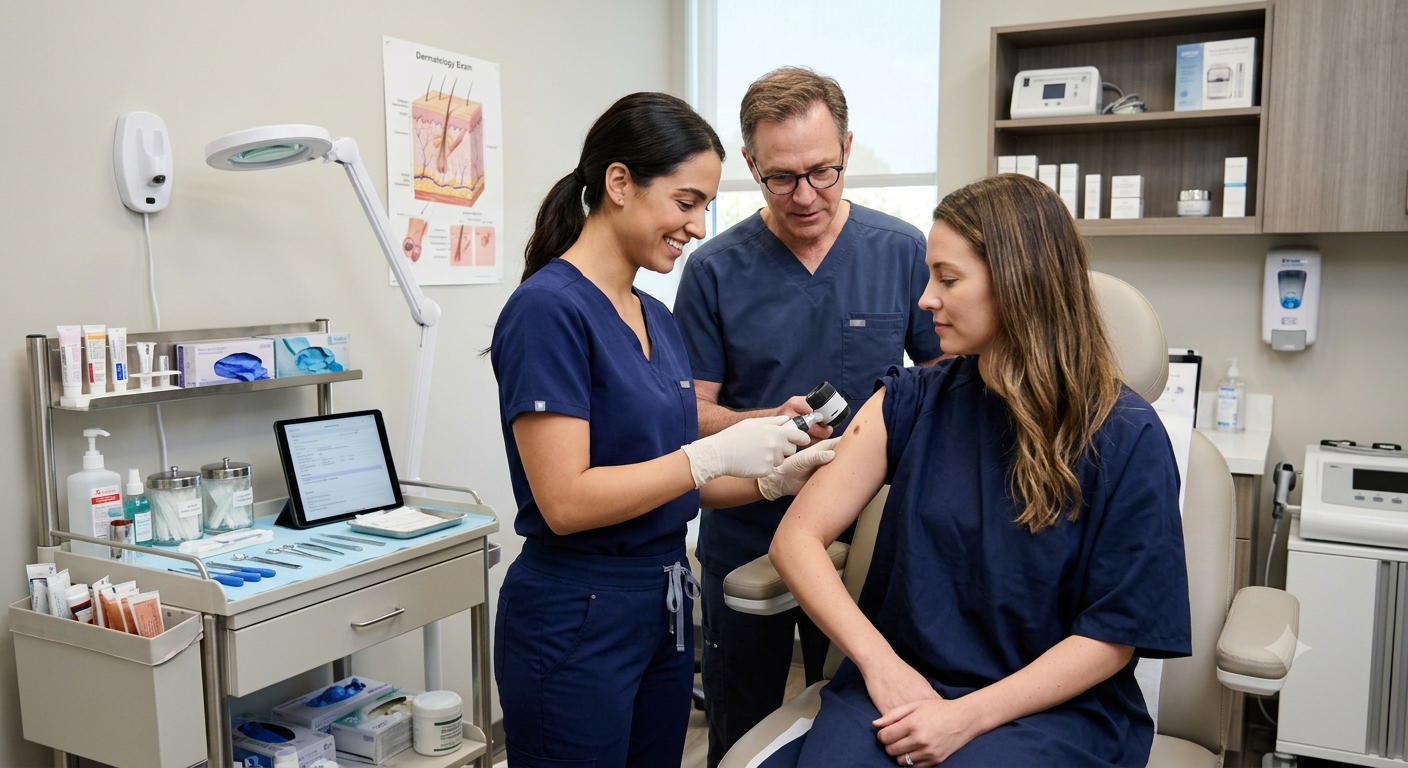
A dermatology medical assistant plays an important role in helping dermatologists provide effective care to patients with skin, hair, and nail conditions. These professionals support doctors, prepare examination rooms, assist during minor procedures, maintain medical records, and help patients understand their appointments and treatment instructions. They combine administrative responsibilities with clinical tasks, making them valuable members of dermatology clinics, hospitals, private practices, and specialized medical centers.
As awareness of skin health continues to grow, dermatology practices need organized and skilled staff who can help manage patient appointments and maintain efficient clinical operations. A dermatology medical assistant works closely with physicians, nurses, and other healthcare professionals to ensure that patients receive professional and comfortable care. For individuals interested in healthcare, patient communication, and skin-related medicine, this career can provide a practical entry point into the medical field.
This guide explains what a dermatology medical assistant does, the skills and qualifications required, typical daily responsibilities, salary considerations, and opportunities for career advancement.
What Is a Dermatology Medical Assistant?
A dermatology medical assistant is a healthcare support professional who helps dermatologists manage patient care and the daily operations of a dermatology practice. Dermatologists specialize in diagnosing and treating conditions affecting the skin, hair, and nails, including acne, eczema, psoriasis, skin infections, and certain forms of skin cancer. Medical assistants help these specialists work efficiently by performing approved clinical and administrative duties.
Unlike general medical assistants who may work in family medicine or other specialties, dermatology medical assistants become familiar with skin examinations, dermatological terminology, biopsy preparation, wound-care instructions, and common skin treatments. Their responsibilities depend on the clinic, their training, local regulations, and the supervision available.
Some dermatology medical assistants spend much of their time interacting with patients and preparing examination rooms, while others also handle scheduling, insurance documentation, and procedure-related tasks. They do not independently diagnose skin conditions or prescribe medication unless separately authorized under applicable professional regulations. Their primary purpose is to support the dermatologist and contribute to safe, organized patient care.
Main Duties and Responsibilities
The daily responsibilities of a dermatology medical assistant usually involve a combination of clinical support and office administration. The exact duties vary according to the size and needs of the practice.
Clinical Responsibilities
Clinical duties often begin with preparing examination rooms and ensuring that the required supplies are available. Medical assistants may bring patients into the examination room, record basic information, measure vital signs when appropriate, and update medical histories according to clinic procedures. They also help make patients comfortable before the dermatologist begins an examination.
During dermatological procedures, trained assistants may prepare sterile or clean supplies, arrange instruments, help maintain an appropriate clinical environment, and provide assistance as directed by the physician. Depending on their training and local scope-of-practice rules, they may support procedures such as skin biopsies, cryotherapy, or minor surgical treatments. They may also apply dressings or reinforce wound-care instructions when authorized.
Maintaining infection-control standards is another essential responsibility. Assistants must follow proper hand hygiene, equipment-cleaning, instrument-handling, and waste-disposal procedures. These precautions help reduce infection risks and protect both patients and healthcare workers.
Administrative Responsibilities
Administrative duties help keep the practice organized. A dermatology medical assistant may schedule appointments, answer telephone calls, update electronic health records, verify patient information, and communicate routine instructions approved by the healthcare team. Some assistants also help process referrals, coordinate laboratory paperwork, and check insurance information.
Accurate documentation is particularly important because dermatologists may need to compare previous examination notes, treatment responses, photographs, and biopsy results. Medical assistants must enter information carefully and protect confidential patient records.
By combining clinical support with administrative organization, these professionals help dermatology clinics maintain a smoother workflow and reduce unnecessary delays.
Education and Qualifications Required
The educational requirements for becoming a dermatology medical assistant vary by country, employer, and the responsibilities of the position. In the United States, many employers prefer candidates who have completed a medical assisting program through a recognized educational institution. These programs commonly cover medical terminology, anatomy, physiology, patient communication, clinical procedures, and medical office administration.
Some employers hire entry-level candidates and provide on-the-job training, particularly for administrative tasks and basic clinical support. However, candidates with formal education or previous healthcare experience may have an advantage when applying for competitive positions.
Professional certification can also strengthen a candidate’s application. In the United States, relevant credentials include Certified Medical Assistant (CMA) and Registered Medical Assistant (RMA), depending on eligibility requirements. Dermatology-specific training may be available through employers or continuing education providers.
Applicants should understand that certification requirements differ between organizations and locations. Certain clinical tasks require additional training, authorization, or direct supervision. Before accepting a position, candidates should check the local rules governing medical assistants and the specific requirements listed by the employer.
Essential Skills for a Dermatology Medical Assistant
Success in this profession requires a combination of communication, organization, clinical awareness, and attention to detail. Medical assistants interact with patients who may feel uncomfortable discussing visible skin conditions, hair loss, changing moles, or other personal concerns. A respectful and reassuring approach helps patients feel more comfortable during examinations.
Important skills include:
- Communication: Explaining routine procedures clearly, listening to patient concerns, and communicating effectively with physicians.
- Attention to detail: Recording medical information accurately and checking that supplies and documentation are complete.
- Organization: Managing appointments, preparing examination rooms, and prioritizing tasks during busy clinic hours.
- Technical knowledge: Understanding medical terminology, infection prevention, basic anatomy, and common dermatological procedures.
- Confidentiality: Protecting patient information and following applicable privacy policies.
- Teamwork: Working cooperatively with dermatologists, nurses, laboratory personnel, and administrative staff.
- Adaptability: Responding calmly when schedules change or urgent patient needs arise.
Computer skills are increasingly important because many practices use electronic health records, digital appointment systems, and secure communication platforms. Familiarity with these tools can help new assistants adjust more quickly to their workplace.
A Typical Day in a Dermatology Clinic
A typical day for a dermatology medical assistant may begin before the first patient arrives. The assistant checks the examination rooms, restocks supplies, prepares instruments according to clinic protocols, and reviews the appointment schedule. This preparation helps ensure that each consultation can proceed efficiently.
When patients arrive, the assistant may confirm their information, review relevant medical history, and prepare them for the dermatologist. Patients visiting for acne, rashes, suspicious moles, or follow-up appointments may require different preparation. The assistant records the information requested by the healthcare team and alerts the dermatologist to relevant concerns without making independent diagnostic decisions.
Throughout the day, the assistant may support examinations and minor procedures, organize documentation, prepare supplies, and communicate routine follow-up instructions approved by the clinician. They may also help arrange appointments for future visits or coordinate paperwork related to laboratory testing.
At the end of the day, responsibilities may include updating outstanding records, restocking supplies, cleaning work areas, and preparing rooms for the next clinic session. Although the work can be fast-paced, good planning and communication help assistants manage competing demands.
Dermatology Medical Assistant Salary and Job Outlook
The salary of a dermatology medical assistant depends on location, experience, qualifications, employer type, and the range of duties performed. Specialized dermatology practices may offer different compensation from general medical offices, hospitals, or larger healthcare organizations.
In the United States, the U.S. Bureau of Labor Statistics provides national employment and wage information for medical assistants as a broader occupational category. Its figures should not automatically be treated as dermatology-specific salary estimates because they include medical assistants working in many specialties.
Candidates researching compensation should compare current job advertisements in their area and consider factors such as certification, clinical experience, working hours, and benefits. Positions in high-cost metropolitan areas may advertise higher wages, although living expenses can also be greater.
The wider medical assisting profession is projected by the U.S. Bureau of Labor Statistics to grow as healthcare services expand and an aging population requires more medical attention. Dermatology practices may also need support staff to manage patient appointments, treatment documentation, and clinical workflows. However, the availability of dermatology-specific jobs varies by region, and national projections do not guarantee employment for individual applicants.
How to Become a Dermatology Medical Assistant
People interested in this career can follow a practical sequence to build their qualifications and improve their chances of finding employment.
Step 1: Complete relevant education. Research medical assisting programs that teach clinical fundamentals, medical terminology, patient communication, and healthcare administration.
Step 2: Gain practical experience. Look for internships, supervised clinical placements, entry-level medical office positions, or other opportunities to become familiar with healthcare environments.
Step 3: Consider certification. Review the eligibility requirements for recognized medical assistant credentials in your country or region. Certification may be preferred or required by some employers.
Step 4: Learn dermatology-specific procedures. Become familiar with common skin conditions, examination-room preparation, infection prevention, and the terminology used in dermatology practices.
Step 5: Prepare a targeted résumé. Highlight relevant education, patient service, medical record management, scheduling experience, clinical training, and any applicable certifications.
Step 6: Apply to suitable employers. Search for openings at dermatology clinics, hospitals, multispecialty practices, and skin-care medical centers. Carefully review each position’s required qualifications and permitted duties.
New applicants should emphasize reliability, willingness to learn, professional communication, and respect for patient privacy. These qualities can be valuable even when a candidate has limited direct dermatology experience.
Career Opportunities and Advancement
Working as a dermatology medical assistant can provide a foundation for several healthcare career paths. With experience and additional education, professionals may qualify for more specialized responsibilities or pursue further training in a related medical field.
Some medical assistants advance into senior assistant positions, clinical team coordination, or practice administration. Others pursue nursing education, healthcare management, or additional clinical qualifications that allow them to take on different responsibilities.
Dermatology experience can also help assistants develop familiarity with skin examinations, patient education, clinical documentation, and outpatient procedures. These skills may be useful when applying for other healthcare positions, although further qualifications may be necessary.
Career advancement depends on the individual’s educational background, employer policies, professional regulations, and willingness to continue learning. Assistants should explore accredited training programs and verify the requirements for any future role they plan to pursue.
Conclusion
A dermatology medical assistant helps dermatologists provide organized, efficient, and patient-focused care. The role combines clinical support, administrative work, infection prevention, medical documentation, and communication with patients who need treatment for skin, hair, and nail conditions.
Although educational and certification requirements vary, relevant medical assisting training, practical experience, and strong interpersonal skills can help candidates prepare for this profession. Understanding the scope of practice and following established clinical procedures are equally important.
For people interested in healthcare, dermatology offers an opportunity to gain specialized experience while supporting patients and medical professionals. With continued education and workplace experience, a dermatology medical assistant may also pursue broader responsibilities or additional healthcare qualifications.
Frequently Asked Questions (FAQs)
What does a dermatology medical assistant do?
A dermatology medical assistant supports dermatologists by preparing examination rooms, recording patient information, assisting with approved procedures, maintaining medical records, scheduling appointments, and helping patients understand routine instructions.
Do you need certification to become a dermatology medical assistant?
Certification is not universally required. Requirements depend on the employer and location. However, recognized medical assisting credentials may improve employment opportunities and demonstrate professional knowledge.
How much does a dermatology medical assistant earn?
Earnings depend on location, experience, qualifications, and employer. Candidates in the United States can consult the U.S. Bureau of Labor Statistics for general medical assistant wage data and compare current dermatology job listings for specialty-specific information.
Is dermatology medical assisting a good career?
It may be a good option for people who enjoy healthcare, patient interaction, organization, and clinical teamwork. The role can also provide experience that supports future education and career development.
Can a dermatology medical assistant perform skin procedures?
Medical assistants may assist with certain procedures or perform specifically authorized tasks when appropriately trained and supervised. The permitted duties depend on local laws, professional regulations, and employer policies. They do not independently diagnose skin conditions.
Where can dermatology medical assistants work?
They commonly work in private dermatology clinics, hospitals, outpatient centers, multispecialty medical practices, and other healthcare facilities that provide dermatological services.
What skills are most important for this job?
Communication, attention to detail, organization, confidentiality, infection-control knowledge, teamwork, and familiarity with medical terminology are among the most important skills.