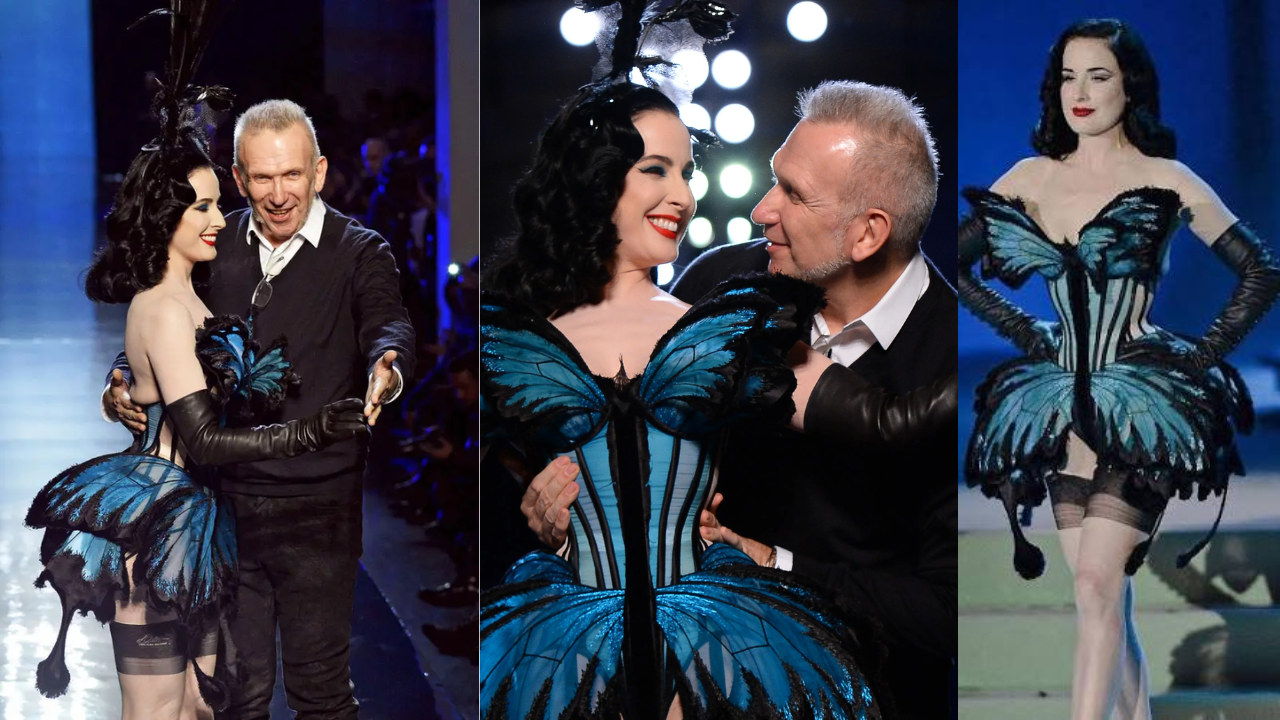
Jean Paul Gaultier and the Rise of a Fashion Rebel
Jean Paul Gaultier became one of the most influential and unconventional figures in modern fashion by challenging established ideas about beauty, gender, and clothing. Born in France in 1952, he began his professional career at a young age and presented his first collection under his own name in 1976. Rather than simply following established Parisian fashion traditions, Gaultier combined tailoring with streetwear, corsetry, sailor-inspired clothing, underwear and theatrical designs. His willingness to challenge expectations earned him the reputation of a fashion rebel, while his technical creativity helped turn controversial ideas into influential fashion statements. Over the decades, his work demonstrated that clothing could be both visually striking and a way to question cultural conventions.
Breaking Traditional Fashion Rules
Jean Paul Gaultier built his reputation by questioning the rules that traditionally separated masculine and feminine clothing. Instead of treating fashion as a fixed system, he experimented with unexpected combinations, including skirts for men, sharply tailored jackets, corsets, sailor-inspired pieces and lingerie worn as outerwear. This approach challenged conventional ideas about how clothing should look on different bodies and helped make his collections feel provocative without losing their craftsmanship. His runway presentations often added humor and theatricality, turning fashion shows into memorable cultural events rather than simple displays of seasonal clothing.
Another important part of Gaultier’s approach was his willingness to take inspiration from ordinary people, street culture and different social groups. He brought references that were often overlooked by luxury fashion into sophisticated collections, creating a distinctive mixture of everyday style and couture techniques. His designs frequently questioned traditional standards of beauty and encouraged audiences to view individuality as an important part of fashion. By refusing to follow predictable formulas, Jean Paul Gaultier helped demonstrate that designers could use clothing to challenge social expectations while still creating commercially recognizable and influential fashion.
The Corset That Changed Fashion
The corset became one of the most recognizable symbols of Jean Paul Gaultier’s creative vision. Rather than treating it only as an undergarment associated with historical beauty standards, he transformed the corset into a visible and powerful fashion statement. His famous cone-bra designs, particularly those created for Madonna, brought structured lingerie into mainstream pop culture and challenged traditional ideas about femininity and the female body. Gaultier’s corsetry combined historical references with exaggerated shapes, modern materials and theatrical styling, creating garments that could appear both glamorous and provocative. This approach influenced designers and popular culture while demonstrating his talent for taking a familiar piece of clothing and giving it an entirely new meaning.
Madonna and the Power of Pop Culture
The relationship between Jean Paul Gaultier and Madonna became one of the defining fashion partnerships of the late 20th century. Gaultier created costumes for Madonna’s 1990 Blond Ambition World Tour, most famously the structured cone-bra corset that became an instantly recognizable image. The collaboration demonstrated how fashion could extend beyond traditional runways and become part of a performer’s identity, stage presence and cultural impact. Gaultier’s designs combined theatrical exaggeration with strong tailoring, helping create a visual language that audiences could immediately associate with Madonna.
The influence of this partnership reached far beyond a single tour. Madonna’s global popularity gave Gaultier’s provocative designs enormous visibility, while his clothing helped reinforce the singer’s bold and rebellious public image. Their collaboration showed how designers and musicians could work together to shape popular culture, with clothing becoming almost as memorable as the performance itself. The cone bra, in particular, became a lasting symbol of the relationship between fashion and pop culture, demonstrating how an unconventional runway idea could become an internationally recognized cultural image.
Gender, Identity and Inclusive Fashion
Jean Paul Gaultier consistently challenged traditional ideas about gender through clothing, casting and presentation. His collections frequently blurred the boundaries between traditionally masculine and feminine styles, showing that garments did not have to be restricted by conventional expectations. Men appeared in skirts and other traditionally feminine-inspired pieces, while women were presented in strong tailoring and designs influenced by menswear. This willingness to question established categories made his work an important part of fashion’s broader conversation about identity and individual expression. Rather than presenting one fixed definition of beauty, Gaultier embraced difference, using fashion as a way to celebrate individuality and encourage people to express themselves beyond conventional dress codes.
The Signature Style of Jean Paul Gaultier
The signature style of Jean Paul Gaultier is built around contrasts, unexpected combinations and instantly recognizable visual references. Breton stripes, sailor-inspired clothing, corsets, cone bras, sharp tailoring and lingerie-influenced designs became recurring elements of his creative language. He often took familiar garments and changed their proportions, materials or context, turning everyday references into something theatrical and distinctly high fashion. This ability to reinterpret established clothing helped make his work recognizable while allowing each collection to explore new ideas.
Another defining characteristic was Gaultier’s ability to combine provocation with craftsmanship. His designs could be humorous, rebellious or deliberately shocking, but they were also carefully constructed and technically sophisticated. He drew inspiration from street culture, popular entertainment, historical dress and different social influences, bringing these references together in unexpected ways. This mixture gave Jean Paul Gaultier a distinctive position within fashion, where experimentation and wearability could exist alongside theatrical presentation. His visual language continues to influence how designers approach gender, tailoring, lingerie and popular culture.
Haute Couture and Global Influence
Jean Paul Gaultier expanded his influence beyond ready-to-wear fashion through haute couture and major international collaborations. He presented his first haute couture collection in 1997, bringing his unconventional ideas into a field traditionally associated with precision, craftsmanship and luxury. His couture work demonstrated that rebellious concepts could be expressed through highly detailed construction, elaborate fabrics and dramatic silhouettes. His influence also reached international fashion houses, including his period as creative director at Hermès from 2003 to 2010, further establishing his position within the global fashion industry.
Why His Fashion Legacy Still Matters
The influence of Jean Paul Gaultier remains visible because many of the ideas he challenged have become important parts of contemporary fashion. His use of gender-fluid styling, visible lingerie, unconventional silhouettes and diverse representations helped push the industry toward a broader understanding of personal expression. Designs that once appeared rebellious or controversial can now be seen throughout mainstream fashion, demonstrating how Gaultier helped shift the boundaries of what could be presented on a runway or worn in public. His career also showed that fashion could engage with social attitudes and popular culture rather than existing only as a form of luxury or decoration.
Gaultier’s legacy is also preserved through the continued relevance of his most recognizable designs and creative concepts. His corsets, Breton stripes, sailor references and theatrical approach remain closely associated with his name, while the fashion house continues to reinterpret his creative universe through collaborations and guest designers. His ability to combine humor, craftsmanship and cultural commentary gave his work a lasting identity. For modern designers and fashion audiences, Jean Paul Gaultier represents an approach to creativity in which questioning established rules can become a source of lasting artistic influence.
Conclusion and FAQs
Jean Paul Gaultier changed modern fashion by challenging traditional ideas about clothing, gender, beauty and self-expression. From his rebellious early collections and iconic corsetry to his influential work with Madonna and his contributions to haute couture, he consistently used fashion as a form of creative experimentation. His distinctive combination of tailoring, lingerie-inspired designs, sailor references and theatrical presentation created a visual language that remains recognizable today. His legacy demonstrates how a designer can challenge established rules while influencing popular culture and inspiring future generations of fashion creators.
FAQs
Who is Jean Paul Gaultier?
Jean Paul Gaultier is a renowned French fashion designer known for provocative, unconventional and influential designs.
What is Jean Paul Gaultier famous for?
He is particularly famous for corsets, cone bras, sailor-inspired clothing, Breton stripes and gender-fluid fashion.
Did Jean Paul Gaultier design for Madonna?
Yes. He created several iconic costumes for Madonna, including the famous cone-bra outfit for her 1990 Blond Ambition World Tour.
Why is Jean Paul Gaultier important to fashion?
He challenged traditional ideas about gender, beauty and clothing while influencing haute couture, popular culture and contemporary fashion.