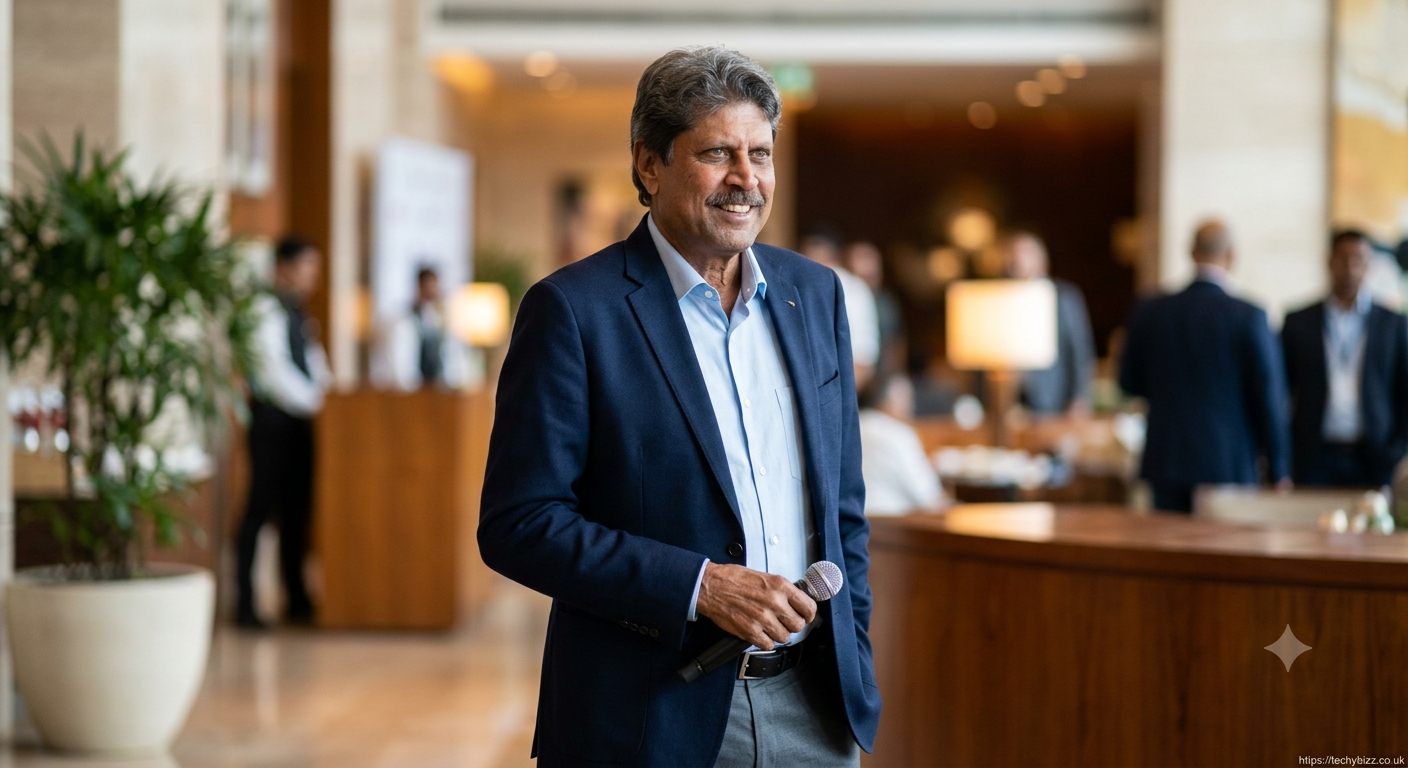
Kapil Dev is one of the most celebrated cricketers in Indian cricket history. Best known for captaining India to its first Cricket World Cup victory in 1983, he transformed the country’s confidence and helped establish India as a serious force in international cricket. His powerful batting, effective fast-medium bowling, athletic fielding, and fearless leadership made him one of the greatest all-rounders of his generation. Kapil Dev represented India from 1978 to 1994 and achieved remarkable success in both Test cricket and One Day Internationals (ODIs).
Born on January 6, 1959, in Chandigarh, India, Kapil Dev rose to international fame through hard work, determination, and an aggressive approach to the game. His unbeaten innings of 175 runs against Zimbabwe during the 1983 World Cup remains one of the most memorable performances in cricket history. Beyond his playing achievements, he became a respected cricket personality, commentator, coach, and businessman. His influence continues to inspire young cricketers who dream of representing India on the international stage.
Early Life and Family Background
Kapil Dev was born as Kapildev Ramlal Nikhanj into a family with roots in Punjab. His early life helped shape the discipline and determination that later became important characteristics of his cricket career. Growing up in northern India, he developed an interest in sports and gradually focused on cricket, a game that would eventually make him one of the country’s most recognizable sporting figures.
During his younger years, Kapil worked to develop his batting and bowling skills. Fast bowling was particularly important to his development because India had relatively few internationally successful fast-bowling all-rounders during that period. His ability to bowl with pace while contributing valuable runs made him different from many other players. Rather than specializing in only one discipline, he developed into a complete cricketer capable of changing the direction of a match with either bat or ball.
His family remained an important part of his personal life as his sporting career progressed. Kapil married Romi Bhatia in 1980, and the couple later welcomed their daughter, Amiya Dev. Although his professional achievements attracted widespread attention, he has generally maintained a distinction between his public cricket career and his private family life.
Beginning of His International Cricket Career
Kapil Dev made his international debut against Pakistan in 1978. He entered the Indian team as a promising young fast-medium bowler who could also contribute aggressively with the bat. At a time when India depended heavily on spin bowling, his emergence offered the national team a valuable new option in pace bowling.
His early performances demonstrated that he possessed the stamina and attacking mentality required for international cricket. Kapil could bowl extended spells, generate movement off the pitch, and challenge established batters. His ability to swing the ball, particularly away from right-handed batters, became one of his most effective weapons.
Kapil’s batting also developed rapidly. He was comfortable playing attacking shots and could score quickly when the team needed momentum. Unlike players who concentrated mainly on defending their wickets, he often looked for opportunities to put pressure back on the opposition. This approach made him particularly valuable in limited-overs cricket, where a short period of aggressive batting could change the result.
As his performances improved, Kapil became an increasingly important member of the Indian side. His success helped establish a new model for Indian fast-bowling all-rounders, combining pace, endurance, batting ability, and competitive confidence.
Kapil Dev and the Historic 1983 Cricket World Cup

The defining moment of Kapil Dev’s career came during the 1983 Cricket World Cup in England. India entered the tournament without being considered the strongest contender. The West Indies, who had won the previous two editions, were widely regarded as the team to beat. However, Kapil believed his players could compete with the world’s best if they approached every match with confidence and determination.
Under his captaincy, India produced several impressive performances and progressed to the final. On June 25, 1983, India faced the West Indies at Lord’s in London. India scored 183 runs before being bowled out, a total that appeared modest against the powerful West Indies batting lineup. Nevertheless, India’s bowlers delivered an outstanding performance, dismissing the defending champions for 140 runs and securing a historic 43-run victory.
One of Kapil’s most memorable contributions during the final was his running catch to dismiss the dangerous Viv Richards. The West Indies batter was looking comfortable at the crease, and his dismissal changed the momentum of the match. Kapil’s catch became one of the most iconic moments in Indian cricket history.
The victory gave India its first men’s Cricket World Cup title and changed how the country viewed its potential in international cricket. Kapil, only 24 years old at the time, became the captain who led India to a breakthrough that would be remembered for generations.
The Unforgettable 175 Against Zimbabwe
One of Kapil Dev’s greatest individual achievements occurred during the same World Cup. India faced Zimbabwe in a crucial group-stage match on June 18, 1983. The Indian batting lineup collapsed under pressure, losing five wickets for just 17 runs. The team appeared close to an embarrassing defeat, but Kapil responded with an extraordinary innings.
He scored an unbeaten 175 runs from 138 balls, rescuing India from a disastrous position. His innings included aggressive stroke play, powerful boundaries, and excellent judgment about when to attack. He received support from the lower order and helped India reach 266 for eight in the allotted 60 overs.
India eventually won the match by 31 runs, keeping its World Cup campaign alive. The innings demonstrated Kapil’s ability to perform under pressure and take responsibility when his team needed him most.
The match is especially famous because it was not televised live, and a complete official broadcast recording of the innings is not available in the way modern cricket fans might expect. Nevertheless, the scorecard, contemporary accounts, and surviving footage have preserved its importance in cricket history.
Kapil’s 175 not out was more than an impressive batting performance. It became a symbol of resilience and self-belief. The innings helped establish his reputation as a player capable of producing extraordinary results in the most difficult circumstances.
Career Statistics and Major Records
Kapil Dev’s international career lasted approximately 16 years, from 1978 to 1994. During that period, he established himself as one of cricket’s most productive all-rounders. His combination of batting and bowling achievements placed him among the outstanding players of his generation.
His major international career statistics include:
| Career category | Achievement |
|---|---|
| Test matches | 131 |
| Test runs | 5,248 |
| Test wickets | 434 |
| Test centuries | 8 |
| ODI matches | 225 |
| ODI runs | 3,783 |
| ODI wickets | 253 |
| Highest ODI score | 175 not out |
| Cricket World Cup titles as captain | 1 |
Source: International Cricket Council player profile and Hall of Fame.
One of his most remarkable achievements was becoming the first cricketer to score more than 5,000 runs and take more than 400 wickets in Test cricket. His 434 Test wickets were a world record when he retired in 1994. This record demonstrated his consistency, fitness, and importance to India’s bowling attack.
In ODIs, Kapil contributed with both disciplines, finishing with 3,783 runs and 253 wickets. His achievements helped show that an all-rounder could be central to a team’s success rather than simply filling a supporting role.
Leadership Style and Impact on Indian Cricket
Kapil Dev’s captaincy was based on courage, trust, and an attacking mindset. He encouraged players to believe that India could compete against stronger opponents, even when the odds appeared unfavorable. His leadership during the 1983 World Cup demonstrated the importance of teamwork and mental strength.
Rather than relying exclusively on individual stars, Kapil’s team benefited from contributions across the squad. Players such as Mohinder Amarnath, Roger Binny, Madan Lal, and others played crucial roles in the tournament. Kapil’s leadership helped bring these performances together at the right time.
His influence extended beyond the World Cup victory. In 1986, India won a Test series in England under his captaincy, another significant achievement in the country’s cricketing development.
Kapil also helped change expectations for Indian fast bowlers. Before his rise, India’s international reputation was strongly associated with spin bowling and technically accomplished batters. His performances showed that an Indian pace bowler could lead the attack, play long spells, and contribute substantially with the bat.
Awards and Recognition
Throughout his career and after retirement, Kapil Dev received numerous honours for his contribution to Indian sport. These recognitions reflect his influence on cricket and his standing among the country’s greatest athletes.
His major honours include:
- Padma Shri (1982): One of India’s important civilian awards, received before his World Cup triumph.
- Padma Bhushan (1991): Recognition of his contributions to Indian sport.
- Wisden Indian Cricketer of the Century (2002): A major recognition of his place in the history of Indian cricket.
- ICC Cricket Hall of Fame (2010): International recognition of his exceptional career and contribution to the game.
 ICC+1
These honours highlight the long-lasting significance of his achievements. His legacy is not limited to statistics because his captaincy helped create a defining moment for Indian cricket.
Life After Retirement
Kapil Dev retired from international cricket in 1994. His departure marked the end of a remarkable playing career, but he remained connected to the sport through several professional activities. He appeared as a cricket commentator and analyst, sharing his understanding of the game with television audiences.
He also served as India’s national team coach during the late 1990s. His coaching tenure was relatively brief, but it represented another stage in his involvement with Indian cricket. In later years, he continued to appear at cricket events, participate in discussions about the sport, and support cricket-related initiatives.
Outside cricket, Kapil pursued business interests and maintained a public profile through interviews and appearances. He has also been associated with golf and other activities beyond professional cricket. His career after retirement reflects the opportunities available to prominent athletes who build reputations through decades of achievement.
Although he no longer competes professionally, his name remains closely associated with India’s 1983 World Cup victory. New generations of fans continue to learn about his career through documentaries, historical recordings, books, and cricket coverage.
Kapil Dev’s Personal Life and Net Worth
Kapil Dev has maintained a relatively private family life despite his public popularity. He married Romi Bhatia in 1980, and their daughter, Amiya Dev, has also attracted public interest because of her connection to the cricket legend. The family generally avoids excessive publicity surrounding personal matters.
Kapil Dev’s financial success comes from several potential income sources accumulated over many decades, including professional cricket, endorsements, commentary, coaching, business interests, and public appearances. His long-standing reputation has helped him remain commercially relevant even after retiring from international cricket.
Various websites publish estimates of Kapil Dev’s net worth, but these figures differ considerably and are not supported by a consistently verified public financial statement. Therefore, any specific figure should be treated as an estimate rather than an established fact.
His broader legacy is better measured through his sporting achievements, influence on Indian cricket, and role in the country’s first men’s World Cup triumph. These accomplishments remain significant regardless of estimates of his personal wealth.
Why Kapil Dev Remains a Cricket Legend
Kapil Dev’s legacy rests on three major qualities: all-round ability, leadership, and the capacity to perform under pressure. His 434 Test wickets and 5,248 Test runs illustrate his extraordinary balance between batting and bowling. His unbeaten 175 against Zimbabwe demonstrates his ability to recover from seemingly impossible situations.
However, his greatest achievement was arguably the 1983 World Cup victory. It proved that India could defeat the strongest teams on the international stage and helped inspire greater belief in the country’s cricketing future.
Kapil’s influence can still be seen in the importance modern teams place on fast-bowling all-rounders. Players who can contribute with the bat, bowl meaningful spells, and perform under pressure are valuable in every format of cricket. Kapil helped establish that standard for Indian cricket long before it became a central feature of the modern game.
His achievements continue to be celebrated by fans, former players, and cricket historians. He is remembered not simply as a former captain but as one of the figures who helped shape India’s rise in world cricket.
Conclusion
Kapil Dev is one of the most influential figures in the history of Indian cricket. From his international debut in 1978 to his retirement in 1994, he demonstrated remarkable skill as a batter, bowler, and leader. His 434 Test wickets, more than 5,000 Test runs, and unbeaten 175 against Zimbabwe remain outstanding achievements.
Above all, his captaincy during the 1983 Cricket World Cup transformed a historic sporting opportunity into a defining national moment. India’s victory over the West Indies at Lord’s established Kapil Dev as a legendary captain and helped inspire future generations of cricketers.
His journey from a young cricketer in Chandigarh to an internationally respected sporting icon illustrates the importance of determination, teamwork, and self-belief. Decades after his retirement, Kapil Dev’s name continues to represent one of Indian cricket’s greatest achievements.
Frequently Asked Questions (FAQs)
1. Who is Kapil Dev?
Kapil Dev is a former Indian international cricketer and captain, widely regarded as one of the greatest all-rounders in cricket history.
2. When was Kapil Dev born?
He was born on January 6, 1959, in Chandigarh, India.
3. Why is Kapil Dev famous?
He is best known for captaining India to its first men’s Cricket World Cup victory in 1983.
4. How many wickets did Kapil Dev take in Test cricket?
He took 434 wickets in 131 Test matches.
5. What was Kapil Dev’s highest ODI score?
His highest ODI score was 175 not out, scored against Zimbabwe during the 1983 World Cup.
6. Who is Kapil Dev’s wife?
Kapil Dev married Romi Bhatia in 1980.
7. Does Kapil Dev have children?
Yes. He and Romi Bhatia have one daughter, Amiya Dev.
8. When did Kapil Dev retire from international cricket?
He retired from international cricket in 1994.
9. What awards has Kapil Dev received?
His honours include the Padma Shri, Padma Bhushan, and induction into the ICC Cricket Hall of Fame.
10. What is Kapil Dev’s greatest achievement?
His most celebrated achievement is leading India to victory in the 1983 Cricket World Cup, changing the course of Indian cricket history.