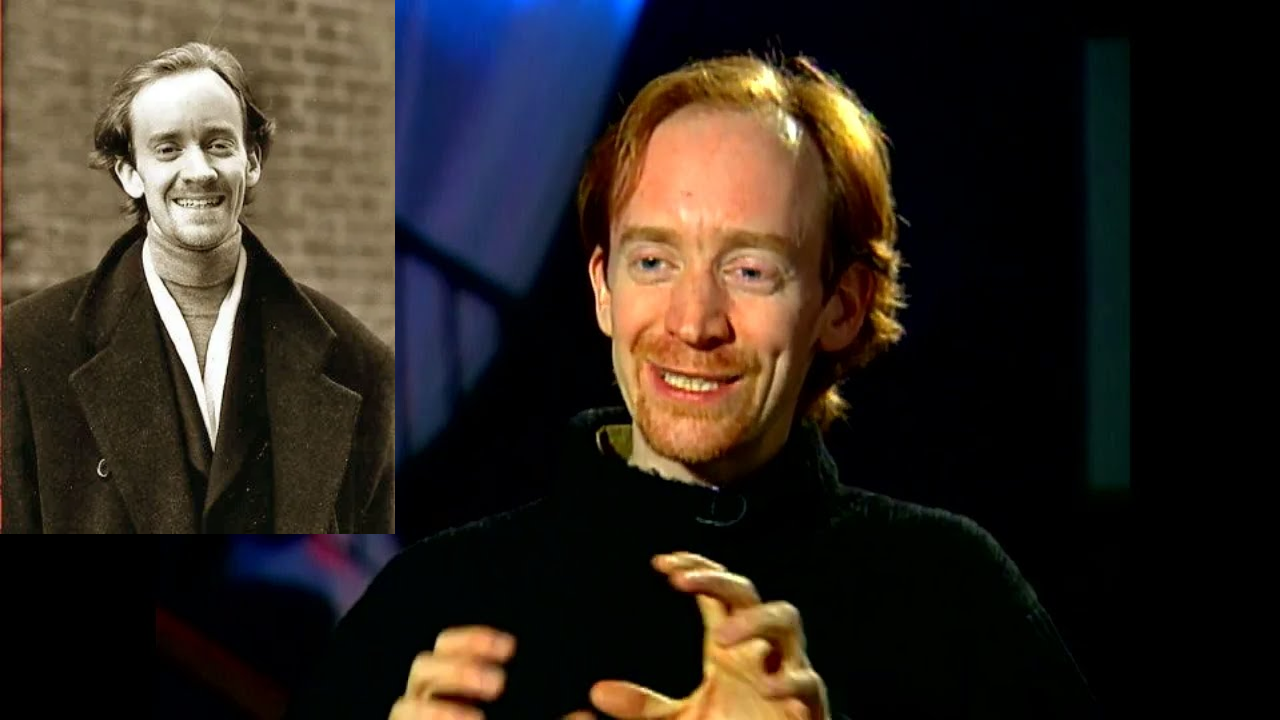
George Antheil’s Early Life and Musical Beginnings
George Antheil was born on July 8, 1900, in Trenton, New Jersey, and developed an interest in music at an early age. He studied piano and composition before establishing himself as both a performer and composer. His early training gave him a foundation in traditional European music, but his creative ambitions soon pushed him toward experimentation. In the early 1920s, Antheil traveled to Europe and eventually settled in Paris, where he became part of an influential community of modern artists and composers. His exposure to the rapidly changing artistic culture of Europe encouraged him to challenge conventional musical ideas and explore bold approaches to rhythm, structure, instrumentation, and sound. These early experiences played an important role in shaping George Antheil into one of the most unconventional American composers of the 20th century.
How George Antheil Entered the European Avant-Garde
After moving to Europe, George Antheil quickly became connected with the energetic avant-garde scene developing in cities such as Berlin and Paris. His European concert tours exposed him to modernist composers and artists who were challenging traditional artistic conventions. By settling in Paris in the early 1920s, Antheil found an environment where experimentation was encouraged, and he developed a distinctive musical identity built around powerful rhythms, unusual structures, and an interest in modern technology. His performances also attracted attention because of their intensity and unconventional character, helping him establish a reputation as a daring young American musician.
Antheil’s European years were especially important because they allowed him to interact with influential personalities from different areas of the arts. He became associated with figures such as Igor Stravinsky, Ezra Pound, and James Joyce, while his work reflected the broader fascination with machinery, speed, jazz, and modern life that characterized parts of the avant-garde movement. Rather than simply reproducing established musical traditions, Antheil wanted his compositions to express the energy of the modern age. This willingness to experiment became one of the defining features of his career and eventually led to some of his most famous works.
Ballet Mécanique and the Machine-Age Sound
Ballet Mécanique became the work most closely associated with George Antheil and his vision of modern music. Composed during his Paris years, the piece reflected his fascination with machines, repetition, movement, and the sounds of an increasingly industrialized world. Its unusual instrumentation, including multiple player pianos and extensive percussion, created a forceful and mechanical musical experience that was radically different from conventional concert compositions of the period. The work received a private performance in Paris in 1925, followed by its first public performance in 1926 and an American premiere at Carnegie Hall in 1927. Although its bold style divided audiences, Ballet Mécanique established Antheil as a significant figure in the avant-garde and remains an important example of early 20th-century experimental music.
Why George Antheil Became Known as the “Bad Boy of Music”
George Antheil developed a reputation for challenging audiences and established musical conventions, which contributed to his memorable nickname, the “Bad Boy of Music.” His performances could be intense and unpredictable, while his compositions frequently used aggressive rhythms, repetition, unusual instrumentation, and mechanical sounds. Rather than trying to make his music immediately comfortable or familiar, Antheil often wanted listeners to experience something startling and new. His willingness to provoke reactions helped distinguish him from more traditional composers and made him one of the more controversial American musical figures of the 1920s.
The nickname also became closely associated with Antheil’s larger personality and artistic independence. He presented himself as a confident, unconventional figure who was willing to take risks both on and off the concert stage. His European performances attracted considerable attention, while works such as Ballet Mécanique reinforced his image as a composer determined to break boundaries. Although his early avant-garde style later changed significantly, the “Bad Boy of Music” identity remained an important part of how George Antheil was remembered and helped contribute to the enduring public interest in his career.
Antheil’s Evolution Beyond Experimental Music
As his career developed, George Antheil gradually moved beyond the extreme experimental style that had defined his early reputation. During the 1930s and 1940s, he explored a broader range of musical forms, incorporating elements of jazz, American popular music, Romantic traditions, and more conventional orchestration into his compositions. He also became increasingly interested in writing music for film and other dramatic settings, demonstrating that his abilities extended well beyond the machine-inspired works of his Paris years. This evolution did not mean that Antheil abandoned innovation; instead, it showed his willingness to adapt and explore new creative directions. His later compositions revealed a more mature and varied musical voice, helping establish George Antheil as a composer whose career could not be defined solely by his early avant-garde experiments.
George Antheil and His Work Outside Music
Beyond composition and performance, George Antheil pursued a remarkably wide range of interests. He worked as a writer and commentator, publishing articles and eventually his autobiography, Bad Boy of Music, in 1945. He also became involved in areas far removed from the concert hall, including science, technology, and military-related ideas. His curiosity about modern technology reflected the same fascination with machines that had influenced his early musical experiments, showing that his interests were not limited to artistic expression.
One of the most unusual chapters of Antheil’s life involved his collaboration with actress and inventor Hedy Lamarr during World War II. Together, they developed a frequency-hopping communication concept intended to make radio-guided torpedoes more difficult for enemies to disrupt. Their patent was granted in 1942, although the technology was not immediately used by the U.S. Navy in the form originally envisioned. The collaboration later became an important part of Antheil’s legacy, demonstrating the breadth of his interests and his willingness to apply creative thinking to technological problems.
The Lasting Legacy of George Antheil
The legacy of George Antheil extends far beyond the controversies surrounding his early career. His willingness to combine music with ideas about machinery, technology, rhythm, and modern life helped expand perceptions of what experimental composition could achieve. Ballet Mécanique remains his best-known work, while his later compositions, film music, writings, and technological interests demonstrate the remarkable range of his career. Although his style changed considerably over time, Antheil’s determination to challenge expectations continued to define his artistic identity. Today, he is remembered as an important American modernist whose unconventional ideas helped connect early 20th-century avant-garde music with the rapidly changing technological culture of his era.
Conclusion
George Antheil’s career was defined by experimentation, independence, and an unusual willingness to challenge established ideas. From his early musical training in the United States to his influential years in the European avant-garde, he continually searched for new ways to express the energy of modern life. Ballet Mécanique became the clearest representation of his machine-age aesthetic, while his later work demonstrated that his creativity extended into orchestral music, film composition, writing, and other fields.
What makes George Antheil particularly memorable is the breadth of his achievements. He was not simply an avant-garde composer known for provocative performances; he was a multidisciplinary thinker whose interests reached from music to technology. His collaboration with Hedy Lamarr added another remarkable dimension to his story, while his surviving compositions continue to attract performers and listeners interested in experimental music. His legacy ultimately rests on his willingness to take creative risks and imagine possibilities beyond the boundaries of his time.
FAQs
Who was George Antheil?
George Antheil was an American composer, pianist, and writer best known for his experimental music and avant-garde compositions. He became internationally recognized for works such as Ballet Mécanique.
What is George Antheil famous for?
He is most famous for Ballet Mécanique, an innovative composition inspired by machines and modern technology. He was also known for his unconventional musical style and the nickname “Bad Boy of Music.”
What did George Antheil and Hedy Lamarr invent?
Antheil and Hedy Lamarr developed a frequency-hopping communication system during World War II. Their 1942 patent described a method intended to make radio-controlled torpedoes more resistant to interference.
When did George Antheil die?
George Antheil died on February 12, 1959, in New York City, at the age of 58.