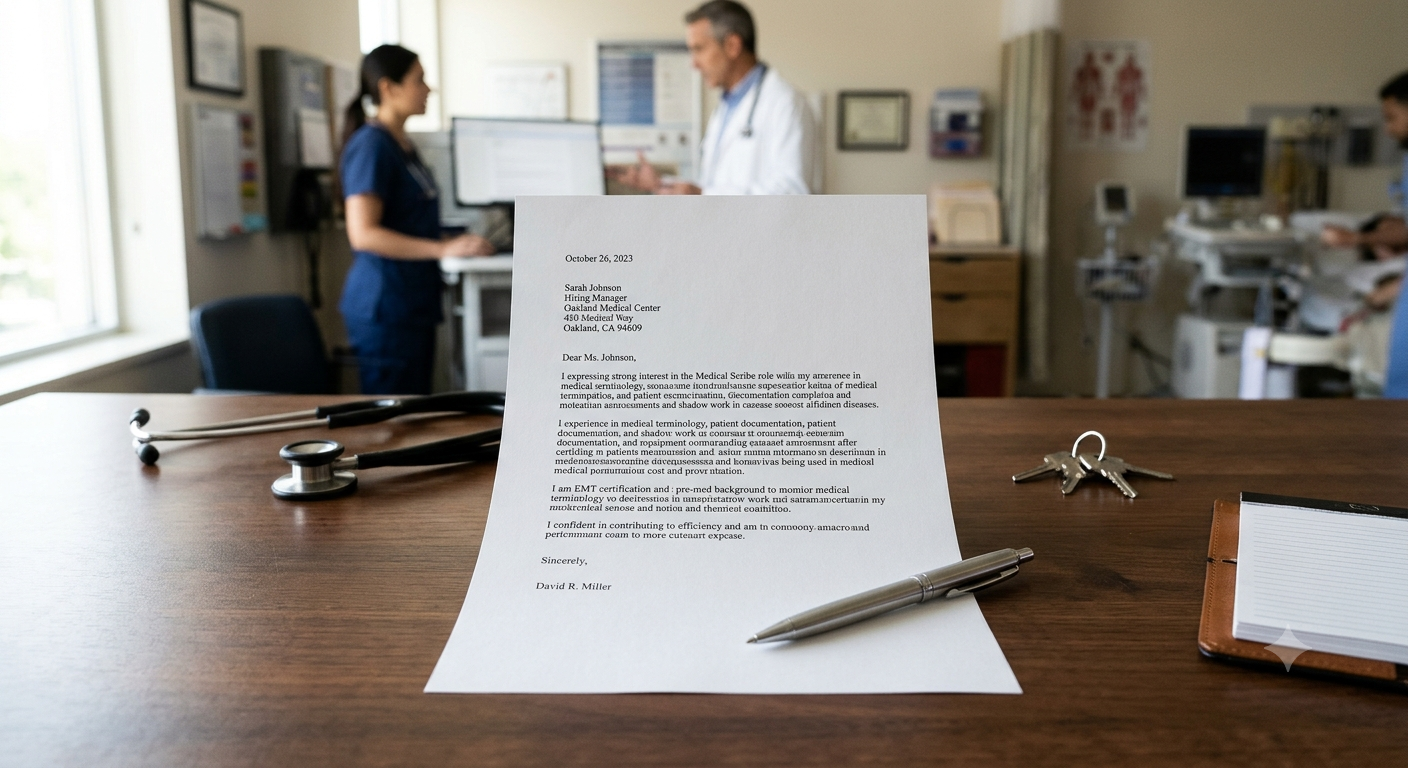
A cover letter for medical scribe positions is an important part of a successful job application. Medical scribes support physicians and other healthcare professionals by documenting patient encounters, updating electronic health records, and helping maintain accurate medical documentation. Because this role requires attention to detail, confidentiality, communication, and familiarity with medical terminology, employers want candidates who can demonstrate these qualities clearly.
A well-written cover letter introduces your qualifications, explains your interest in the position, and shows how your skills can benefit a healthcare organization. Whether you are an experienced medical scribe, a recent graduate, or someone seeking an entry-level opportunity, a tailored cover letter can help you make a positive first impression.
In this guide, you will learn how to structure a medical scribe cover letter, which skills to highlight, and how to write an effective example that you can adapt to your own application.
What Is a Medical Scribe Cover Letter?
A medical scribe cover letter is a professional document submitted alongside your resume when applying for a medical scribe position. It explains why you are interested in the job and how your background, abilities, and professional goals match the employer’s requirements.
Unlike a resume, which lists your education, experience, and skills, a cover letter provides context. It allows you to explain your motivation for working in healthcare, describe relevant experiences, and demonstrate your understanding of the responsibilities involved.
For example, candidates may mention their experience entering information into electronic health records, managing confidential documents, organizing clinical information, or communicating effectively in busy environments.
Applicants without direct medical scribe experience can also discuss transferable skills gained through education, customer service, administrative work, volunteering, or healthcare-related training.
Why a Cover Letter Matters for Medical Scribe Jobs
Medical scribe positions require more than fast typing. Employers often look for people who can accurately document patient information while working efficiently in a clinical environment.
A strong cover letter helps demonstrate that you understand these expectations. It also allows you to explain why you are interested in the particular clinic, hospital, or medical practice.
A carefully prepared application can highlight several important qualities:
- Attention to detail: Accurate documentation is essential when recording clinical information.
- Confidentiality: Medical scribes must respect patient privacy and follow applicable privacy policies.
- Communication: Scribes need to understand instructions and work professionally with healthcare teams.
- Time management: Clinical settings can be busy, making efficient documentation important.
- Willingness to learn: New employees may need training in medical terminology, documentation standards, and electronic health record systems.
A personalized cover letter connects these qualities to your actual experience instead of simply listing them.
How to Write a Cover Letter for Medical Scribe
An effective cover letter should be organized, concise, and easy to read. One page is generally sufficient for most entry-level and experienced applications.
Start With a Professional Header
Include your full name, phone number, email address, and location. If you know the hiring manager’s name, address the letter directly to that person. Otherwise, use a professional greeting such as “Dear Hiring Manager.”
Write an Engaging Opening Paragraph
Begin by stating the position you are applying for and explaining your interest in the opportunity. Mention something relevant about the employer when possible.
For example, you could explain that you want to contribute to accurate clinical documentation and help healthcare professionals manage their administrative responsibilities efficiently.
Avoid generic statements that could apply to any job. Your opening should establish a clear connection between your interests and the medical scribe role.
Highlight Relevant Skills and Experience
The middle paragraph should explain why you are a suitable candidate. Include examples of relevant abilities, such as accurate data entry, knowledge of medical terminology, computer proficiency, organization, and communication.
If you have previous medical scribe experience, describe your responsibilities and accomplishments honestly. If you are new to the field, focus on your education, relevant coursework, certifications, and transferable skills.
Explain Your Interest in the Employer
Show that you have considered the organization and its work environment. You might mention your interest in outpatient care, emergency medicine, primary care, or another clinical setting, depending on the position.
Keep your explanation genuine and specific rather than using exaggerated praise.
End With a Professional Closing
Conclude by thanking the employer for considering your application. Express your interest in discussing your qualifications during an interview and finish with “Sincerely,” followed by your name.
Essential Skills to Highlight
The strongest medical scribe cover letters focus on skills that match the job description.
Medical terminology: Familiarity with common medical terms, abbreviations, and clinical documentation can help you understand and record information accurately.
Electronic health records: Experience with electronic health record systems is valuable. If you have used a specific system, mention it only when relevant and accurate.
Typing and data entry: Medical scribes often need to enter information efficiently while maintaining accuracy. Relevant experience can demonstrate your readiness for this responsibility.
Attention to detail: Explain how you check information, follow instructions, or maintain accurate records.
Confidentiality and professionalism: Employers need candidates who understand the importance of protecting sensitive patient information.
Teamwork and adaptability: Medical scribes collaborate with clinicians and other staff members. Examples of working in a team or adapting to changing priorities can strengthen your application.
Whenever possible, support these skills with specific examples instead of relying on adjectives alone.
Cover Letter for Medical Scribe With No Experience
Writing a cover letter without previous medical scribe experience may seem challenging, but it is possible to create a compelling application. Employers may consider candidates with relevant education, strong administrative skills, and a willingness to learn.
Begin by emphasizing your interest in healthcare documentation and your understanding of the role. Then connect your existing experience to the position.
For example, a biology student may highlight coursework related to human anatomy, while an administrative assistant may discuss accurate recordkeeping and data entry. A customer service worker might emphasize communication, professionalism, and the ability to manage competing priorities.
You should also mention relevant training or certifications if you have completed them. Do not claim clinical experience, technical expertise, or certifications that you do not possess.
A strong entry-level cover letter communicates three things: you understand the responsibilities, you have useful transferable skills, and you are prepared to learn the employer’s procedures.
Medical Scribe Cover Letter Example
The following sample can be customized for an entry-level medical scribe position.
[Your Full Name]
[Your Phone Number]
[Your Email Address]
[Date]
Hiring Manager
[Clinic or Hospital Name]
[Organization Address]
Subject: Application for Medical Scribe Position
Dear Hiring Manager,
I am writing to apply for the Medical Scribe position at [Clinic or Hospital Name]. I am interested in supporting healthcare professionals by helping maintain accurate patient documentation and organized electronic health records. My attention to detail, computer skills, and commitment to professionalism make me enthusiastic about the opportunity to contribute to your team.
Through my education and previous experiences, I have developed strong organizational, communication, and data-entry skills. I understand the importance of documenting information accurately, following established procedures, and maintaining the confidentiality of sensitive records. I am also eager to strengthen my knowledge of medical terminology and electronic health record systems through training and practical experience.
I recognize that medical scribes play an important role in supporting clinical workflows. I would approach this responsibility with care, efficiency, and a willingness to learn from physicians and other healthcare professionals. I am comfortable working in a team environment and understand the importance of following instructions and asking for clarification whenever necessary to support accurate documentation.
I would welcome the opportunity to discuss how my skills, motivation, and interest in healthcare documentation could contribute to your organization. Thank you for considering my application. I look forward to the possibility of speaking with you about the position.
Sincerely,
[Your Full Name]
How to customize this example: Replace the placeholders with your details, add one or two genuine examples of your relevant skills, and tailor the content to the employer’s job description. If you have previous medical scribe experience, replace the entry-level discussion with specific responsibilities and achievements.
Common Mistakes to Avoid
Even qualified applicants can weaken their applications by making avoidable mistakes.
One common mistake is submitting the same generic letter to every employer. A tailored letter demonstrates that you have reviewed the position and understand its requirements.
Another mistake is repeating the resume word for word. Your cover letter should explain the relevance of your experience rather than simply reproduce a list of qualifications.
Avoid spelling errors, incorrect employer names, informal language, and unnecessarily long paragraphs. These issues can create doubts about your attention to detail.
You should also avoid exaggerating your skills. Medical documentation requires accuracy, so honesty about your experience and training is particularly important.
Finally, do not overlook confidentiality. Never include identifiable patient information or confidential clinical details in your application, even when describing previous work.
Tips to Make Your Application Stand Out
To improve your cover letter, begin by carefully reviewing the job advertisement. Identify the most important requirements and address the ones that genuinely match your background.
Use clear, direct language and keep your letter focused on the employer’s needs. Whenever possible, demonstrate your abilities through examples, such as maintaining accurate records, completing detailed data-entry tasks, or working effectively under time pressure.
Maintain a professional format with readable fonts, consistent spacing, and a logical structure. Proofread the document before submitting it and ensure that your resume and cover letter contain consistent employment dates and qualifications.
If the employer requests a particular document format or additional information, follow those instructions carefully. A well-organized application demonstrates professionalism before you even attend an interview.
Conclusion
A strong cover letter for medical scribe applications explains your interest in the role, highlights relevant qualifications, and demonstrates your commitment to accurate documentation and patient confidentiality. Whether you have previous experience or are applying for your first position, the key is to connect your real skills to the employer’s needs.
Use a clear structure, provide relevant examples, and customize each application instead of relying on a generic template. By presenting yourself honestly and professionally, you can make a stronger impression and improve your chances of being considered for an interview.
11. Frequently Asked Questions
What should I include in a cover letter for a medical scribe?
Include your contact information, the position you are applying for, a brief introduction, relevant skills and experience, your interest in the employer, and a professional closing.
How long should a medical scribe cover letter be?
A cover letter should generally fit on one page. Three or four concise paragraphs are often enough to communicate your qualifications and motivation.
Can I apply for a medical scribe job without experience?
Yes. Some employers consider entry-level candidates. Highlight transferable skills, relevant education, knowledge of medical terminology, computer proficiency, and your willingness to learn.
What skills are most important for a medical scribe?
Important skills include attention to detail, accurate typing, familiarity with medical terminology, computer proficiency, communication, time management, and respect for patient confidentiality.
Should I mention medical terminology in my cover letter?
Yes, if you have relevant knowledge or training. Explain how it supports your ability to understand clinical information and document it accurately. Do not overstate your level of expertise.
Do I need a separate cover letter for every medical scribe application?
It is best to customize each letter. Adjust the employer’s name, job title, relevant skills, and examples to match the specific position.
What is the best way to end a medical scribe cover letter?
Thank the hiring manager for their time, express interest in an interview, and close with a professional phrase such as “Sincerely,” followed by your full name.