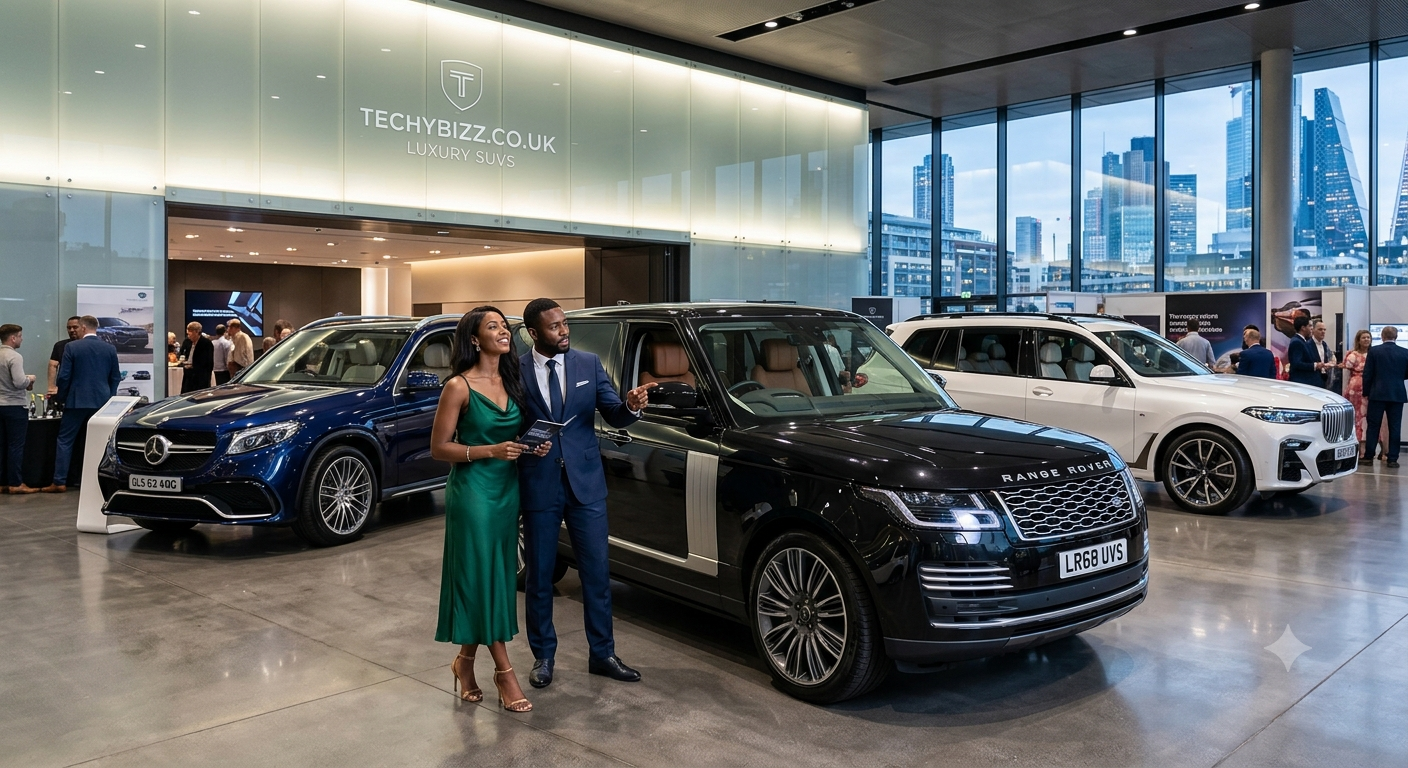
What Are Luxury SUVs?
Luxury SUVs combine the practicality of a sport utility vehicle with the comfort, performance, technology, and premium design associated with high-end automobiles. They are designed for drivers who want generous passenger space, a commanding driving position, refined interiors, and advanced features without sacrificing everyday usability. Depending on the model, a luxury SUV may offer leather upholstery, heated and ventilated seats, panoramic sunroofs, sophisticated suspension systems, powerful engines, and advanced driver-assistance technologies.
The popularity of luxury SUVs continues to grow because they serve a wide range of needs. Some models are compact enough for city driving, while others provide three rows of seating for larger families. Buyers can also choose from traditional gasoline engines, hybrid powertrains, plug-in hybrids, and fully electric vehicles. However, not every luxury SUV delivers the same level of reliability, comfort, or value. Understanding the differences between models is essential before making a purchase.
Best Luxury SUVs to Consider
The luxury SUV market includes vehicles from established manufacturers such as BMW, Mercedes-Benz, Lexus, Audi, Volvo, Genesis, Cadillac, and Land Rover. Each brand emphasizes different qualities, including sporty handling, sophisticated interiors, long-distance comfort, off-road ability, or advanced technology. The best choice depends on your priorities rather than the badge on the vehicle.
Several models deserve consideration when comparing luxury SUVs in 2026. The BMW X5 appeals to drivers who want a balance of comfort and engaging performance, while the Mercedes-Benz GLE emphasizes refinement and premium cabin technology. The Lexus RX is worth considering for buyers interested in comfort and available hybrid efficiency. Meanwhile, the Genesis GV80 offers distinctive styling and an upscale interior, and the Volvo XC90 is an option for families who need three rows of seating. These vehicles differ in price, equipment, and capabilities, so comparing specific trims is important.
Interior Comfort and Premium Features
One of the biggest reasons people choose luxury SUVs is the interior experience. Manufacturers often use higher-quality upholstery, attractive decorative trim, supportive seats, improved cabin insulation, and carefully designed controls. These details can make everyday journeys more comfortable, especially when driving long distances or spending considerable time in traffic. Larger models may also provide generous legroom, reclining rear seats, and flexible seating arrangements.
Modern luxury SUVs frequently include digital instrument displays, large infotainment screens, wireless smartphone connectivity, premium sound systems, ambient lighting, and multi-zone climate control. Some higher trims offer massage functions, upgraded rear-seat entertainment, and advanced air filtration systems. Nevertheless, expensive equipment does not automatically guarantee a better experience. Buyers should test the seating position, visibility, touchscreen usability, and rear passenger space before deciding which features justify the additional cost.
Performance and Driving Experience
Luxury SUVs are available with a wide variety of powertrains, from economical four-cylinder engines to powerful six-cylinder and V8 options. Some models prioritize smooth acceleration and quiet cruising, while performance-oriented versions focus on sharper steering, stronger braking, and faster acceleration. All-wheel drive is available on many vehicles, helping improve traction in suitable conditions, particularly on wet roads or slippery surfaces.
Ride quality is another important consideration. Adaptive suspension systems can adjust damping to improve comfort or handling, depending on the driving mode and road conditions. Larger wheels may create a more dramatic appearance, but they can also make the ride firmer and increase tire replacement costs. Anyone considering a luxury SUV should take a test drive on city streets and highways to assess road noise, suspension comfort, steering response, and parking convenience. Impressive engine specifications matter, but the overall driving experience is equally important.
Safety and Advanced Technology
Safety is a major factor when selecting a luxury SUV, particularly for families and frequent highway drivers. Many modern models offer automatic emergency braking, forward collision warnings, blind-spot monitoring, lane departure alerts, adaptive cruise control, and rear cross-traffic warnings. Depending on the vehicle and trim, additional features may include a surround-view camera, parking assistance, and systems that help maintain a suitable following distance.
However, the presence of safety technology should not be treated as proof that every model offers the same level of protection. Buyers should check independent crash-test ratings, recall information, and the availability of specific features on the exact model year they intend to purchase. Driver-assistance systems also have limitations and may struggle in poor weather, unclear road markings, or complex traffic situations. They support attentive driving but do not replace it.
Luxury SUVs by Size and Lifestyle
Luxury SUVs are commonly divided into compact, midsize, and full-size categories. Compact models are generally easier to park and maneuver in crowded urban areas. Examples include the BMW X1, Mercedes-Benz GLC, and Audi Q5. They can suit individuals, couples, and small families who want premium features without the dimensions of a larger vehicle.
Midsize and full-size SUVs offer more passenger space and, in many cases, additional cargo capacity. The BMW X5, Lexus RX, and Genesis GV80 are examples of midsize options, while the Cadillac Escalade and Lincoln Navigator represent the full-size luxury segment. Three-row models are especially useful for families who regularly carry several passengers. Before choosing a larger SUV, consider garage dimensions, road conditions, fuel consumption, and whether the third row will genuinely be used. A smaller vehicle may provide a better balance of convenience and luxury for everyday travel.
Hybrid and Electric Luxury SUVs
Hybrid and electric vehicles have expanded the luxury SUV market by giving buyers alternatives to conventional gasoline engines. Hybrid SUVs combine a combustion engine with an electric motor to reduce fuel consumption in suitable driving conditions. Plug-in hybrids can travel some distance using electricity alone when charged, although their real-world efficiency depends on driving patterns, charging habits, and weather.
Fully electric luxury SUVs provide quiet operation, instant torque, and the convenience of charging at home when suitable equipment is available. Models such as the Tesla Model X, Volvo EX90, and other premium electric SUVs appeal to drivers interested in electric mobility. However, buyers should evaluate real-world driving range, charging access, battery warranty, charging speed, and local electricity costs. In regions where public charging infrastructure is limited, a conventional hybrid may be more practical than a fully electric vehicle.
Factors to Consider Before Buying
Choosing among luxury SUVs requires more than comparing starting prices or exterior styling. Begin by identifying your budget and the features you actually need. Consider passenger capacity, luggage space, daily driving distance, road conditions, parking limitations, and whether you require towing capability or off-road performance. These practical details help narrow the selection before you compare individual models.
It is also important to compare the total cost of ownership. Insurance, fuel or electricity, scheduled maintenance, tires, taxes, registration, and financing can add substantially to the purchase price. Request quotations for the exact model and trim, and check whether common replacement parts are readily available in your region. A vehicle with an attractive purchase price may become expensive if repairs are complicated or parts are difficult to obtain. Comparing new and certified pre-owned options may also help you find a model that meets your needs without exceeding your budget.
Maintenance and Ownership Costs
Luxury SUVs can cost more to maintain than mainstream vehicles because they may use specialized components, larger tires, complex electronics, and sophisticated suspension systems. Routine servicing may include oil and filter changes, brake inspections, fluid replacement, tire rotation, and software updates. Following the manufacturer’s maintenance schedule can help preserve performance and reduce the risk of avoidable problems.
Used luxury SUVs require particular attention. Before purchasing one, review its service history, accident records, recall status, mileage, and warranty coverage. Arrange an independent mechanical inspection, including checks of the engine, transmission, suspension, brakes, electronics, and any hybrid or electric components. A pre-purchase inspection may reveal issues that are not obvious during a short test drive. Buyers should also investigate resale values and local repair costs rather than assuming that every prestigious brand will retain its value equally well.
Frequently Asked Questions
What are the best luxury SUVs in 2026?
The best choice depends on your priorities. The BMW X5 is worth considering for performance and comfort, the Lexus RX for everyday refinement and available hybrid efficiency, the Genesis GV80 for its upscale cabin, and the Volvo XC90 for families needing three rows. Compare current model-year specifications and independent reviews before buying.
Are luxury SUVs worth the extra money?
They can be worthwhile for drivers who value premium interiors, quieter cabins, stronger performance options, advanced technology, and additional comfort features. However, the benefits should be weighed against higher purchase prices, insurance premiums, maintenance expenses, and depreciation.
Which luxury SUVs are suitable for families?
Family buyers should prioritize passenger protection, rear-seat space, child-seat compatibility, cargo capacity, and convenient access to the third row if needed. Models such as the Volvo XC90, Genesis GV80, and larger Cadillac and Lincoln SUVs may suit different family sizes and budgets.
Are hybrid luxury SUVs better than gasoline models?
Hybrid SUVs can reduce fuel consumption in many driving situations, particularly in stop-and-go traffic. Whether a hybrid is the better option depends on its purchase price, driving conditions, fuel prices, and expected ownership period. Comparing real-world efficiency is more useful than relying on the powertrain label alone.
What should I check before buying a used luxury SUV?
Review the maintenance history, accident records, recalls, mileage, warranty, and ownership costs. Have a qualified mechanic inspect the vehicle and confirm that its safety equipment and major systems work correctly. Also check the availability and price of replacement parts.
Conclusion
Luxury SUVs offer a combination of premium comfort, practical space, modern technology, and varied performance options. From compact urban vehicles to spacious three-row models and fully electric alternatives, there is a wide range of choices for different lifestyles and budgets. The right vehicle is the one that matches your driving needs while delivering dependable performance and manageable ownership costs.
Before purchasing, compare several models, test-drive the exact trims you are considering, and investigate reliability, safety ratings, fuel economy, warranty coverage, and maintenance expenses. The smartest luxury SUV purchase is not necessarily the most expensive model; it is the one that provides the right balance of comfort, capability, safety, and long-term value.