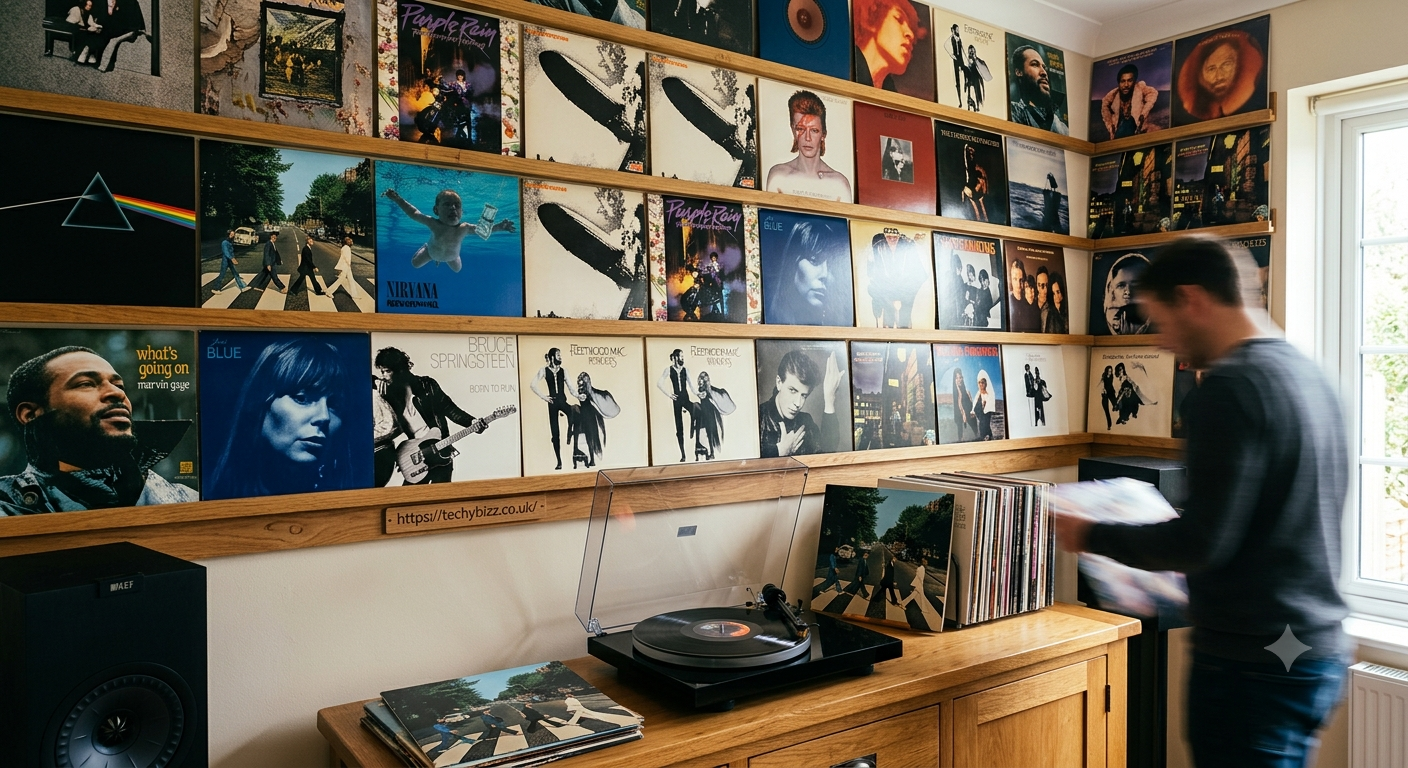
Music has produced thousands of remarkable albums, but only a select group can truly be described as the greatest albums of all time. These records have done more than sell millions of copies or produce popular singles. They have influenced musicians, changed musical styles, reflected important moments in culture, and continued to connect with listeners decades after their release. While there can never be one universally accepted ranking, albums such as What’s Going On, Pet Sounds, Abbey Road, Nevermind, Purple Rain, and Songs in the Key of Life repeatedly appear on major critics’ and musicians’ lists. Rolling Stone’s major ranking, for example, placed What’s Going On at No. 1 in its 2020 edition, while other major music projects have produced very different rankings.
What Makes an Album One of the Greatest?
Determining the greatest albums of all time is not simply about counting sales. Commercial success can be important, but artistic quality, cultural impact, innovation, songwriting, production, influence, and longevity are equally significant. A truly great album often feels like more than a collection of individual songs. The tracks work together to create a particular atmosphere, story, sound, or artistic statement.
Critical consensus also matters. Lists from publications, music historians, artists, critics, and streaming platforms frequently overlap, even when their exact rankings differ. Apple Music’s 100 Best Albums, for instance, was assembled with the help of artists and experts and includes records from rock, pop, hip-hop, soul, jazz, and other genres. This shows that greatness in music is not limited to one particular style.
1. What’s Going On — Marvin Gaye
Released in 1971, What’s Going On remains one of the most important albums in popular music. Marvin Gaye combined soul, jazz, gospel, and socially conscious songwriting to create an album that addressed war, poverty, environmental concerns, spirituality, and human relationships. Rather than relying only on traditional romantic soul themes, Gaye used his music to reflect the uncertainty and social tensions of his era.
The album’s title track became an enduring cultural statement, but the strength of the record comes from its complete experience. The songs flow together and create a unified emotional journey. Rolling Stone’s 2020 ranking placed What’s Going On first among its 500 greatest albums, while it also remains highly regarded by other major music-ranking projects.
2. Pet Sounds — The Beach Boys
The Beach Boys’ Pet Sounds, released in 1966, helped redefine what a pop album could accomplish in the recording studio. Led creatively by Brian Wilson, the record combined sophisticated harmonies, unusual instruments, layered arrangements, and deeply personal songwriting. Songs such as “Wouldn’t It Be Nice” and “God Only Knows” demonstrated that popular music could be both commercially accessible and artistically ambitious.
Its influence has lasted for generations. Acclaimed Music has ranked Pet Sounds at or near the top of its historical album rankings, while Rolling Stone and other major publications have consistently included it among the most important records ever made.
3. Abbey Road — The Beatles
Abbey Road is one of the defining achievements of The Beatles. Released in 1969, it combines memorable songwriting with inventive production and one of the most celebrated album-closing sequences in popular music. Tracks including “Come Together,” “Something,” “Here Comes the Sun,” and “Here Comes the Sun”—along with the famous medley on the second side—help explain why the record remains so popular.
The album’s importance extends beyond its commercial success. It represents The Beatles at an extraordinary creative peak and has remained a reference point for album sequencing, studio production, and songwriting. Rolling Stone’s 2020 list ranked it fifth, while Canon Archive’s aggregated 2026 album canon places it at No. 1 after comparing several major historical rankings.
4. Revolver — The Beatles
Another essential Beatles album is Revolver, released in 1966. It demonstrated how rapidly the group was expanding its musical vocabulary. Psychedelic experimentation, innovative studio techniques, Indian musical influences, orchestration, and concise pop songwriting all appeared within the album’s relatively short running time.
Revolver has received particularly strong critical recognition over the years. Acclaimed Music ranked it third in its 2020 historical ranking, and Canon Archive’s 2026 aggregated canon places it second overall. Its influence can be heard across psychedelic rock, alternative music, pop production, and experimental recording.
5. Songs in the Key of Life — Stevie Wonder
Stevie Wonder’s Songs in the Key of Life is frequently celebrated for its combination of musical ambition and emotional depth. Released in 1976, the double album moves between soul, funk, jazz, pop, and orchestral sounds while exploring love, family, society, spirituality, and everyday life.
The album demonstrates Wonder’s exceptional ability as a songwriter, vocalist, arranger, and musician. Its broad range does not make it feel disconnected; instead, the diversity contributes to its sense of scale. Rolling Stone placed it fourth in its 2020 ranking, making it one of the highest-ranked albums on that list.
6. Nevermind — Nirvana
Nirvana’s Nevermind transformed the mainstream music landscape after its release in 1991. Although grunge had already developed as a scene in Seattle, the album brought the sound to an enormous international audience. Its combination of heavy guitars, memorable melodies, raw performances, and Kurt Cobain’s emotionally direct songwriting helped redefine alternative rock in the early 1990s.
Songs such as “Smells Like Teen Spirit,” “Come as You Are,” and “Lithium” became defining tracks of the era. Acclaimed Music ranked Nevermind second in its 2020 historical ranking, while Rolling Stone placed it sixth in its 2020 list. Its continued influence makes it an essential part of any discussion about the greatest albums of all time.
7. Purple Rain — Prince
Prince’s Purple Rain successfully combined rock, pop, funk, R&B, and soul while establishing Prince as one of the most distinctive artists of his generation. Released in 1984 as both a studio album and soundtrack to the film of the same name, it produced enduring songs including “When Doves Cry,” “Let’s Go Crazy,” and the title track.
The album is notable because of its emotional range and Prince’s extraordinary musicianship. It can move from energetic funk-rock to intimate balladry without losing its identity. Rolling Stone ranked Purple Rain eighth in its 2020 list, and Apple Music’s 100 Best Albums placed it fourth overall.
8. Blue — Joni Mitchell
Joni Mitchell’s Blue is widely regarded as one of the most influential singer-songwriter albums ever created. Released in 1971, it is built around emotional honesty, sophisticated songwriting, acoustic arrangements, and Mitchell’s distinctive vocal and lyrical style.
The album’s strength comes from its intimacy. Rather than relying on elaborate production, Mitchell often allows the songwriting and performances to remain at the center. Songs such as “River,” “A Case of You,” and “California” have become enduring examples of personal songwriting. Rolling Stone ranked Blue third in its 2020 list.
9. Thriller — Michael Jackson
Michael Jackson’s Thriller is both an artistic landmark and one of the most commercially successful albums in music history. Released in 1982, it combined pop, funk, R&B, rock, and soul, supported by highly polished production and Jackson’s distinctive performance style.
Its cultural impact was enormous. Tracks such as “Billie Jean,” “Beat It,” and “Thriller” became international classics, while the album helped establish the music video as a major promotional and artistic medium. Apple Music ranked Thriller second on its 100 Best Albums list, demonstrating the record’s continuing significance.
10. The Miseducation of Lauryn Hill
Lauryn Hill’s The Miseducation of Lauryn Hill expanded the possibilities of hip-hop and contemporary R&B. Released in 1998, it combined rap, soul, reggae, and melodic songwriting while exploring relationships, identity, motherhood, spirituality, and personal growth.
The album’s influence has remained strong because its themes are personal but widely relatable. Apple Music selected it as its No. 1 album in the 100 Best Albums project. Its success also demonstrated that a genre-crossing album could become both critically respected and culturally dominant.
Other Albums That Belong in the Conversation
A list of the greatest albums of all time can never be completely definitive. Numerous other records have had enormous influence across different generations and genres. Bob Dylan’s Highway 61 Revisited helped redefine the possibilities of folk-rock songwriting, while Fleetwood Mac’s Rumours became a landmark of emotionally charged pop-rock.
The Rolling Stones’ Exile on Main St., Public Enemy’s It Takes a Nation of Millions to Hold Us Back, Radiohead’s OK Computer, Kendrick Lamar’s To Pimp a Butterfly, Bruce Springsteen’s Born to Run, and The Velvet Underground & Nico’s self-titled debut are also frequently included in serious discussions of music’s greatest albums. Rolling Stone’s ranking includes all of these records within its broader top selections.
Why These Albums Still Matter
The best albums survive because they continue to offer something new to listeners. A record can be technically impressive when it is released, but true artistic longevity requires more. Great albums often influence musicians who were not even born when the records first appeared. They become reference points for producers, songwriters, performers, and entire musical movements.
Another reason these albums remain important is their ability to represent their historical moments while transcending them. What’s Going On speaks to social concerns that remain recognizable today. Nevermind captured a major cultural shift in rock music. Purple Rain demonstrated the power of genre-blending. The Miseducation of Lauryn Hill connected hip-hop with deeply personal storytelling. Their continued relevance shows why an album’s legacy cannot be measured solely by its original sales.
How to Choose the Greatest Album for You
There is no requirement to agree with critics’ rankings. Music is deeply personal, and the album that changes one listener’s life may not appear near the top of a professional poll. Rankings are useful as starting points, but personal experience ultimately determines what becomes a favorite.
A good approach is to explore different decades and genres. Listen to classic soul through Marvin Gaye and Stevie Wonder, explore innovative rock with The Beatles and Radiohead, experience singer-songwriter music through Joni Mitchell and Bob Dylan, and explore hip-hop through Lauryn Hill, Public Enemy, and Kendrick Lamar. This creates a broader understanding of why different records are considered historically important.
Final Thoughts
The greatest albums of all time are not defined by a single formula. Some changed recording technology, some transformed genres, some captured important social moments, and others simply contained extraordinary songs performed by exceptional artists. The strongest albums accomplish several of these things at once.
Lists will continue to change as new generations discover older records and new artists create music that eventually earns a place in the canon. Major rankings already demonstrate that there is no single universal answer: Rolling Stone, Acclaimed Music, Apple Music, and aggregated music projects often agree on many landmark records while placing them in different positions. Ultimately, the greatest album is the one that continues to sound meaningful long after its original release—and gives listeners a reason to press play again.