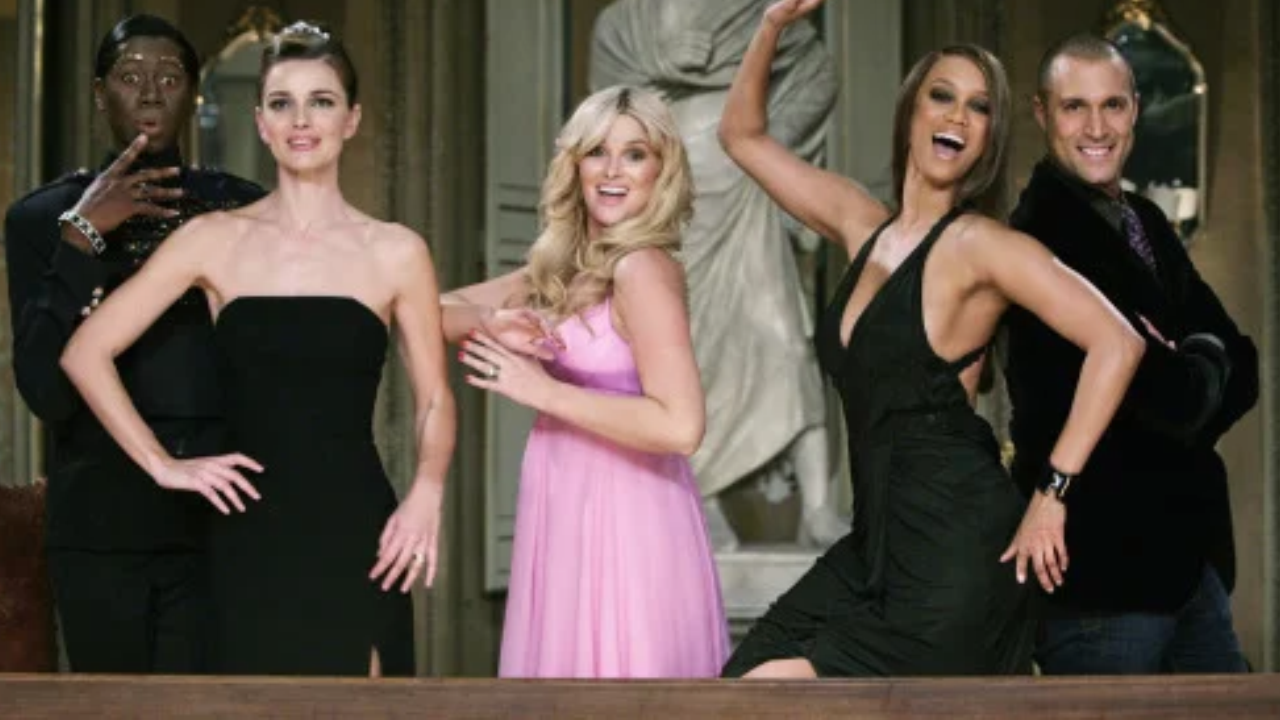
Whitney Thompson became widely known after winning America’s Next Top Model Cycle 10, making her one of the most recognizable contestants in the show’s history. Her victory attracted particular attention because she was the first plus-size model to win the competition. At the time, her success was widely discussed as an important moment in the reality show’s continuing conversation about beauty, fashion and body representation.
Her appearance on America’s Next Top Model did more than introduce her to television audiences. The competition gave Thompson opportunities in modeling, commercial work and public speaking. Following her victory, she received a CoverGirl cosmetics contract and representation with Elite Model Management, while also appearing on the cover of Seventeen magazine.
Who Is Whitney Thompson?
whitney thompson america’s next top model who rose to national attention through America’s Next Top Model. Before appearing on the program, she was a student, according to a CBS News profile published shortly after her victory. Her participation in the tenth cycle eventually turned into a major career opportunity when she was selected as the season’s winner.
Thompson’s win was especially notable because the fashion industry and mainstream media had historically emphasized a relatively narrow range of body sizes. Her success therefore became part of a broader discussion about whether modeling could include women with different body shapes. CBS News later described her as the first plus-size model to win the television competition.
Whitney Thompson on America’s Next Top Model
Cycle 10 of America’s Next Top Model provided Thompson with a platform to demonstrate different aspects of modeling, including photography, runway presentation and commercial appeal. Like other contestants, she faced the show’s challenges and photo shoots while competing for the overall title.
Winning the competition gave Thompson a substantial prize package. CBS News reported that her prizes included a contract with CoverGirl, a contract with Elite Model Management and a Seventeen magazine cover. The CoverGirl agreement also involved print advertising, a Times Square billboard and a national television commercial.
The victory helped establish Thompson as a recognizable figure beyond the program itself. Her career subsequently became connected not only with modeling but also with discussions about body image and representation.
Why Whitney Thompson’s Win Was Significant
One of the most frequently discussed aspects of Thompson’s victory was her body size. CBS News reported in 2010 that Thompson was a size 12 to 14 at the time and had built a career as a plus-size model. Her success challenged the idea that contestants on a major televised modeling competition had to fit a single conventional body type.
Her win also occurred during a period when the fashion and entertainment industries were increasingly debating representation. America’s Next Top Model had already featured contestants with different backgrounds and appearances, but Thompson’s victory placed body size at the center of the conversation.
A later CBS News report discussing the show’s winners noted that Thompson had won the previous cycle before Ann Ward’s victory in Cycle 15. The report presented the two winners as examples of very different body types appearing within the same franchise.
Modeling Career After the Show
After America’s Next Top Model, Thompson continued working in the fashion and commercial space. CBS News reported that she was signed with Wilhelmina and had developed a career as a plus-size model. She also became associated with Fashion Bug and served as a spokesperson for the clothing retailer.
Her work demonstrated that winning a reality television competition could lead to opportunities beyond the immediate prize package. Thompson’s career included modeling, promotional appearances and public advocacy around body image.
She also launched a jewelry line called Supermodel in 2009, according to CBS News. This represented another direction in her professional career and showed her interest in building a personal brand beyond traditional modeling assignments.
Whitney Thompson and Body Image
Body image became one of the most closely associated subjects with Thompson after her television victory. She publicly discussed the pressures women can experience because of beauty standards and the fashion industry’s treatment of different body types.
In a 2010 CBS News interview and profile, Thompson discussed the commercial pressures surrounding dieting and appearance. She argued that people should be able to make personal choices about their bodies while also developing acceptance of themselves. These comments helped connect her modeling career with the wider body-image conversation.
Thompson also criticized excessive image editing in fashion photography. Her comments reflected a broader debate about whether heavily retouched photographs can create unrealistic expectations for consumers and aspiring models.
Work With the National Eating Disorders Association
Thompson’s public work extended into eating-disorder awareness. CBS News reported that in 2010 she had become a spokesperson for the National Eating Disorders Association.
Her involvement reflected her broader interest in conversations about self-esteem, body image and the pressures surrounding appearance. Rather than treating modeling solely as a fashion career, Thompson increasingly used her public profile to discuss how media images can affect people’s perceptions of themselves.
Her participation in body-image campaigns also connected her with organizations and activists working to challenge harmful stereotypes surrounding women’s appearance.
Love Your Body Day
In 2010, Thompson participated in Love Your Body Day, an initiative associated with the National Organization for Women. CBS News reported that she appeared alongside Chenese Lewis as part of the campaign, which encouraged women to accept their bodies and questioned advertising and media images that could contribute to negative self-perception.
The campaign fit naturally with Thompson’s public image following America’s Next Top Model. Her own experience as a successful plus-size model gave her a personal connection to conversations about fashion standards and representation.
Her participation also illustrated how her career developed beyond simply appearing in magazines or advertisements. She became a public voice in discussions surrounding body acceptance and diversity in fashion.
Whitney Thompson at Plus-Size Fashion Events
Thompson also supported greater visibility for plus-size models in fashion. CBS News reported on her attendance at a plus-size fashion show held during New York Fashion Week.
She expressed enthusiasm about seeing a curvy fashion show associated with Fashion Week and discussed the importance of giving different body types greater space within the industry.
Her involvement was significant because mainstream fashion events had traditionally been associated with narrower sizing standards. Plus-size fashion shows provided a separate platform for designers and models whose work did not always fit those traditional expectations.
Her Connection to the Broader ANTM Legacy
Whitney Thompson’s victory remains part of the larger history of America’s Next Top Model. The program, created and hosted by Tyra Banks, ran for 22 cycles over roughly 13 years before its original run ended in 2015. CBS News reported at the time that the show had been on television for 12 years and was concluding after its 22nd cycle.
The show’s approach to beauty and representation has continued to generate discussion. In later years, former contestants and public figures revisited different aspects of the program, while fashion media continued debating the industry’s treatment of body diversity.
Thompson’s Cycle 10 victory is particularly memorable because it occurred before the fashion industry’s current level of discussion around size inclusivity. Her win therefore became an important reference point whenever the history of plus-size representation on reality television was discussed.
Where Whitney Thompson’s Career Stands
Whitney Thompson’s most visible period of mainstream fame began with America’s Next Top Model, but her professional identity expanded beyond the show. Her modeling work, commercial appearances, jewelry business and advocacy around body image all became parts of her public career.
It is important to distinguish confirmed information about her professional history from unsupported claims about her current private life or finances. Public sources clearly document her Cycle 10 victory, modeling representation, CoverGirl contract, Fashion Bug work and body-image advocacy.
Because information about celebrities and former reality-TV contestants can become outdated, current claims about Thompson’s exact occupation, income or personal circumstances should be treated carefully unless supported by a recent, reliable source.
Frequently Asked Questions
When did Whitney Thompson win America’s Next Top Model?
Whitney Thompson won Cycle 10 of America’s Next Top Model in 2008. CBS News identified her as the winner of the tenth cycle and reported the major prizes associated with her victory.
Was Whitney Thompson the first plus-size winner of ANTM?
Yes. CBS News reported that Thompson became the first plus-size model to win America’s Next Top Model. Her victory consequently received significant attention in discussions about representation in modeling.
What did Whitney Thompson win on America’s Next Top Model?
Her prize package included a CoverGirl cosmetics contract, representation with Elite Model Management and a Seventeen magazine cover. The CoverGirl agreement also included advertising and television promotional work.
Did Whitney Thompson continue modeling after ANTM?
Yes. CBS News reported that she continued working as a plus-size model and was signed with Wilhelmina. She also worked as a spokesperson for Fashion Bug.
What is Whitney Thompson known for besides modeling?
Thompson became known for discussing body image, self-acceptance and representation in fashion. She participated in Love Your Body Day and became a spokesperson for the National Eating Disorders Association.
Final Thoughts
Whitney Thompson’s journey on America’s Next Top Model remains notable because her Cycle 10 victory placed a plus-size model at the center of one of television’s best-known modeling competitions. Her success brought modeling contracts, magazine exposure and commercial opportunities, while her later public work expanded the conversation toward body image and representation.
Her story is therefore about more than winning a reality television competition. Thompson became part of a broader shift in how audiences and the fashion industry discussed beauty, body size and representation. Her documented work after the show—including modeling, commercial partnerships, jewelry and advocacy—helped establish a career that extended beyond her original reality-TV appearance.