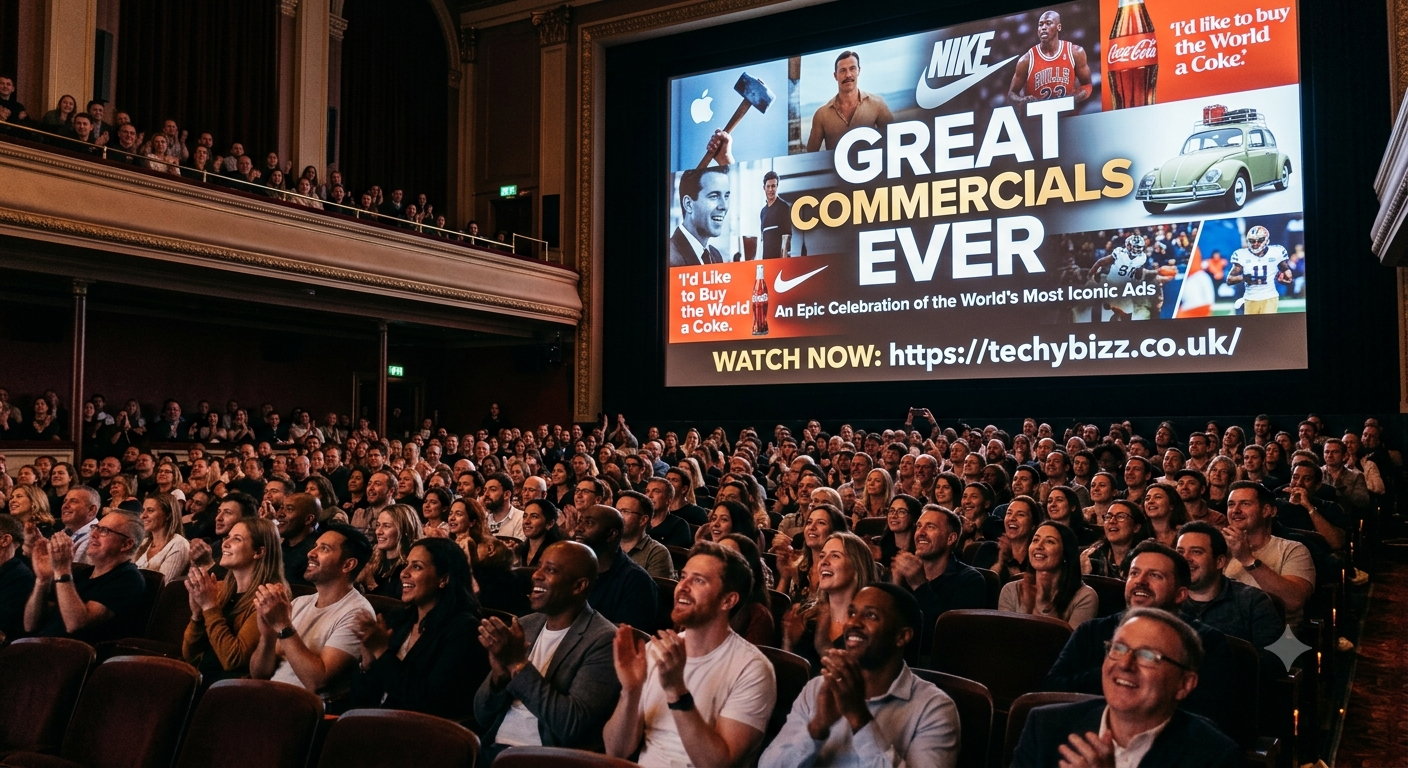
The greatest commercials ever are more than short advertisements designed to sell a product. The best commercials become part of popular culture, create emotional connections, introduce unforgettable characters, and sometimes influence how an entire generation thinks about advertising. From humorous television spots to powerful emotional campaigns, iconic commercials have demonstrated that a few minutes of creative storytelling can leave a lasting impression.
Advertising has changed dramatically with the growth of streaming platforms, social media, and digital marketing. However, many classic commercials remain memorable decades after they first appeared. Their success usually comes from a combination of creativity, strong storytelling, memorable music, humor, cultural relevance, and a clear brand message.
What Makes a Commercial Great?
A great commercial needs to accomplish more than simply showing a product. It must capture attention quickly and give viewers a reason to remember the advertisement after it ends. Since audiences are exposed to thousands of marketing messages, standing out is one of the biggest challenges for advertisers.
The most successful commercials often tell a simple story that people can understand immediately. Humor can make an advertisement entertaining, while emotional storytelling can create a stronger connection with viewers. Memorable slogans, characters, jingles, and visual ideas can also help an advertisement remain recognizable long after its original broadcast.
Apple’s “1984” Commercial
Apple’s “1984” advertisement is frequently regarded as one of the most influential commercials in advertising history. Created for the launch of the Macintosh computer, the commercial presented a dramatic and cinematic vision inspired by George Orwell’s famous dystopian novel.
Instead of focusing heavily on technical specifications, the advertisement positioned Apple as a challenger to conformity. A runner entering a theater and destroying a giant screen created a powerful visual metaphor. The commercial aired during the 1984 Super Bowl and quickly became a major topic of conversation.
Its importance comes from the way it transformed a product advertisement into a cultural statement. It demonstrated that commercials could function like short films while still communicating a strong brand identity.
Coca-Cola’s “Hilltop” Campaign
Coca-Cola has produced many memorable advertisements, but the “Hilltop” campaign is one of its most recognizable. The commercial featured people from different backgrounds singing about sharing Coca-Cola and living together peacefully.
The campaign connected the beverage with friendship, optimism, and togetherness rather than simply emphasizing taste. Its famous song became closely associated with the brand and helped demonstrate the power of music in advertising.
The campaign’s emotional message allowed it to remain relevant long after its original television run. It also established a formula that many later advertisements attempted to reproduce: connect a product with a positive human emotion.
Nike and the Power of “Just Do It”
Nike’s “Just Do It” campaign became one of the most recognizable slogans in modern advertising. Rather than limiting the message to a particular sport or product, Nike used the phrase to promote determination, ambition, and personal achievement.
Over the years, Nike commercials have featured professional athletes alongside ordinary people. This combination helped make the campaign appealing to a broad audience. The advertisements often communicate that athletic achievement is not only about winning competitions but also about overcoming personal limitations.
The success of “Just Do It” shows why a simple message can become extremely powerful when consistently connected to a recognizable brand identity.
Old Spice and Humorous Advertising
Old Spice demonstrated how humor could completely transform a brand’s advertising strategy. The “The Man Your Man Could Smell Like” campaign used an exaggerated character, rapid scene changes, absurd situations, and direct humor to attract attention.
The commercial became highly shareable online, helping the campaign move beyond traditional television advertising. Its success was particularly important because it demonstrated how a traditional consumer brand could use internet culture to reach younger audiences.
The campaign also showed that advertisements do not necessarily have to be serious to be effective. A memorable personality and entertaining concept can make viewers voluntarily watch and share a commercial.
Budweiser’s Clydesdale Commercials
Budweiser’s Clydesdale horses have become some of the most recognizable animals in advertising. The brand has repeatedly used the horses in emotional stories involving friendship, loyalty, perseverance, and companionship.
These commercials often contain minimal dialogue and rely heavily on visual storytelling and music. This makes the advertisements easy to understand even without extensive explanation.
The Clydesdale campaigns demonstrate how a recurring visual symbol can become an important part of brand identity. Viewers can often recognize a Budweiser commercial before the product is even shown.
Volkswagen’s “Think Small”
Volkswagen’s “Think Small” campaign is another landmark in advertising history. At a time when many American car advertisements emphasized large vehicles and impressive features, Volkswagen took a different approach by openly acknowledging the small size of its Beetle.
The campaign used simplicity, honesty, and clever copywriting to make the car’s small size an advantage. Instead of trying to hide what made the vehicle different, the advertisement embraced it.
This approach helped establish a new standard for creative advertising. It proved that a brand could turn a potential weakness into a memorable selling point through clever positioning.
“Where’s the Beef?”
Wendy’s “Where’s the Beef?” campaign became a major cultural phenomenon in the 1980s. The commercial used a memorable older woman questioning the size of the hamburger’s beef patty.
The phrase became popular beyond advertising and entered everyday conversation. This is an important characteristic of the greatest commercials ever: they can escape the boundaries of advertising and become part of popular language.
The commercial also demonstrates the value of repetition. A short phrase combined with an unusual character and simple visual idea can become remarkably memorable.
Emotional Super Bowl Commercials
The Super Bowl has become one of the biggest stages for commercial advertising. Because millions of people watch the event, companies often invest heavily in producing advertisements specifically for the broadcast.
Some of the most memorable Super Bowl commercials rely on emotional storytelling. Advertisers have used stories involving family, friendship, animals, personal challenges, and major life moments to connect with viewers.
These advertisements can generate discussion on social media even before or after the game. Their success demonstrates that advertising today extends far beyond the television screen.
Why Humor Works So Well in Commercials
Humor is one of the most effective tools available to advertisers because people naturally remember things that make them laugh. A funny commercial can interrupt the normal advertising experience and encourage viewers to pay attention.
However, humor alone does not guarantee success. The joke must still be connected to the brand. If people remember the joke but cannot remember which company created it, the advertisement may not accomplish its marketing objective.
The greatest humorous commercials balance entertainment with branding. The audience enjoys the advertisement while still understanding the product or company behind it.
The Role of Music in Iconic Advertising
Music has played an important role in some of the greatest commercials ever. A memorable song can create an emotional response and make an advertisement easier to remember.
Advertisers frequently use original songs, licensed music, jingles, or specially written soundtracks. When the music matches the message and visuals, it can make a commercial feel more like a cultural experience than a traditional advertisement.
Some advertising songs have even become successful outside the commercial itself. This illustrates how powerful the relationship between music and visual storytelling can be.
How Digital Media Changed Commercials
Traditional television is no longer the only place where major commercials appear. YouTube, TikTok, Instagram, streaming platforms, and other digital channels have changed how brands create and distribute advertising.
Modern commercials can be shorter, interactive, personalized, or designed specifically for social sharing. Some campaigns release several versions of the same concept, while others encourage viewers to participate.
Despite these changes, the fundamental principles remain similar. Successful advertisements still need a strong idea, clear branding, emotional or entertainment value, and a reason for audiences to remember them.
What We Can Learn From the Greatest Commercials Ever
The most successful commercials teach several important lessons. First, simplicity can be extremely powerful. A straightforward concept can sometimes outperform an advertisement filled with information.
Second, emotion matters. People are more likely to remember advertisements that make them laugh, cry, feel inspired, or experience surprise.
Finally, strong branding is essential. A memorable advertisement should make viewers remember not only the story but also the company behind it.
Frequently Asked Questions
What is considered the greatest commercial ever?
There is no single universally accepted answer. Apple’s “1984,” Coca-Cola’s “Hilltop,” Volkswagen’s “Think Small,” and several Nike and Super Bowl campaigns are frequently recognized as influential examples of exceptional advertising.
Why are old commercials still remembered?
Classic commercials often used simple concepts, memorable characters, music, slogans, and strong storytelling. These elements helped them remain recognizable even after many years.
Are funny commercials more successful?
Humor can significantly improve memorability and audience engagement, but it works best when the humor is clearly connected to the brand and product.
What makes a commercial iconic?
An iconic commercial usually combines creativity, emotional impact, memorable visuals or language, strong branding, and cultural relevance.
Are modern commercials better than older commercials?
Modern advertisements have access to advanced technology, digital platforms, and sophisticated targeting. However, older commercials often remain influential because their creative concepts were simple, distinctive, and easy to remember.
Conclusion
The greatest commercials ever demonstrate that advertising can be much more than selling products. The most memorable campaigns tell stories, create emotions, introduce unforgettable characters, and sometimes become part of popular culture. From Apple’s groundbreaking “1984” to Coca-Cola’s emotional campaigns, Nike’s motivational messaging, Volkswagen’s clever simplicity, and Old Spice’s modern humor, each successful advertisement offers a different lesson in creativity.
Although advertising continues to evolve through social media, streaming, and artificial intelligence, the basic formula for memorable communication remains remarkably consistent. A great idea, a clear message, strong storytelling, and authentic branding can turn a short commercial into something audiences remember for years.