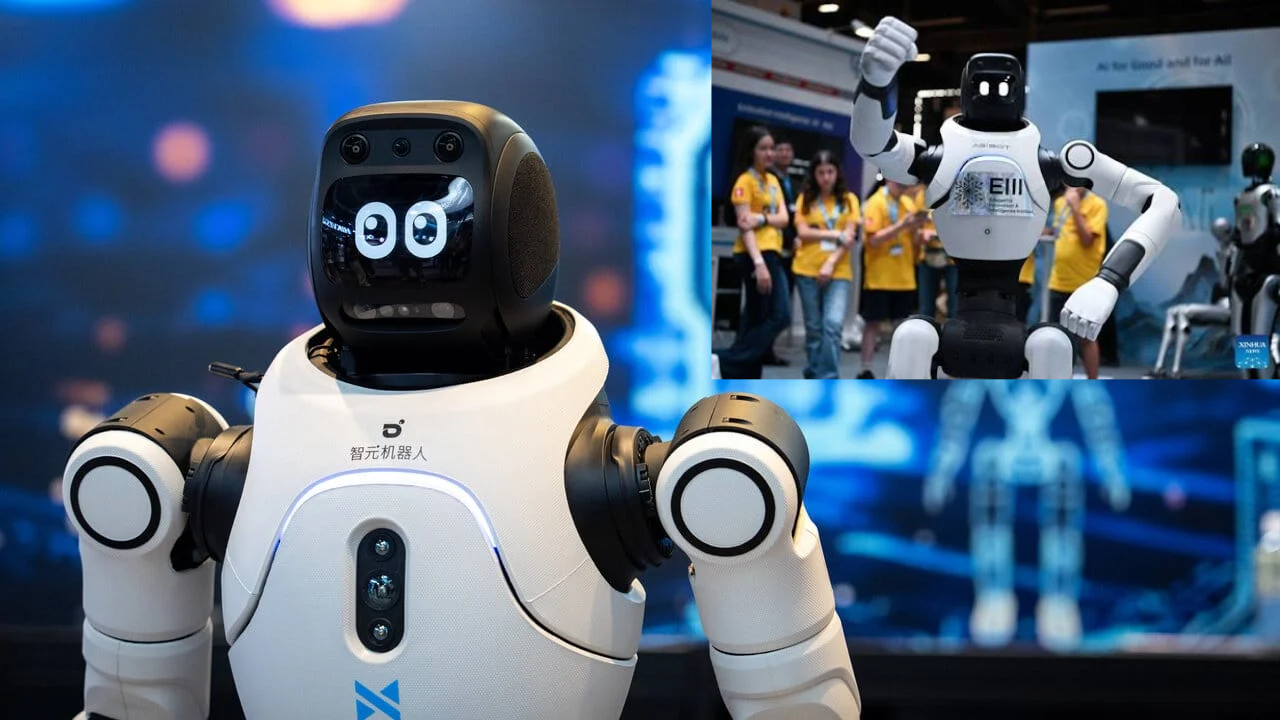
Technology continues to move rapidly, and latest technology news this week shows that artificial intelligence, advanced chips, cybersecurity, smartphones, and cloud computing remain at the center of the industry. The week of September 14–18, 2026 brought several developments that could influence how companies build, deploy, and secure technology.
AI safety was particularly prominent, while semiconductor competition continued to grow. At the same time, a serious Pixel vulnerability highlighted the importance of software security, and businesses continued investing in infrastructure needed to run increasingly powerful AI systems.
AI Safety Becomes a Major Technology Focus
One of the biggest themes in this week’s technology news has been the growing discussion around AI safety. OpenAI, Anthropic, and Google have reportedly been communicating about AI safety issues, including ways to evaluate increasingly capable AI systems. The discussions come as researchers and technology leaders debate how companies should monitor advanced models and reduce potential risks.
Microsoft also proposed an AI code of conduct focused on keeping humans involved in the control of AI systems. The development reflects a broader industry discussion about how AI should be deployed inside businesses and public institutions.
These developments demonstrate that AI competition is no longer only about creating more capable models. Companies are also paying greater attention to testing, oversight, cybersecurity, and responsible deployment.
Huawei Pushes Further Into Advanced AI Chips
Semiconductors remain another major story. Huawei unveiled new chip technologies and its Atlas 960 SuperPoD computing cluster in China this week. The company says the new system improves AI training and inference compared with its previous generation.
The announcement is significant because advanced AI computing depends heavily on high-performance processors and data-center infrastructure. Huawei’s developments also come amid continuing restrictions on China’s access to some advanced American chips and semiconductor manufacturing technologies.
Huawei also discussed future Ascend 970 and Ascend 980 chip generations planned for later years. The announcements illustrate China’s ongoing effort to develop domestic alternatives for AI computing.
Google Pixel Security Vulnerability Raises Concerns
Cybersecurity was another important part of the latest technology news this week. Google said that a vulnerability affecting Pixel smartphone software had been exploited in limited and targeted attacks.
The vulnerability, identified as CVE-2026-58704, was found in the modem software. According to reporting, exploitation could potentially allow an attacker to move beyond the modem’s security boundaries and access broader phone data. The attack could also work without requiring the victim to click a malicious link or open a file. Google has patched the issue.
The incident highlights why smartphone manufacturers regularly release security updates. Even devices with modern security protections can contain vulnerabilities that attackers attempt to exploit.
AI Data Centers Need More Infrastructure
The expansion of artificial intelligence is also changing the infrastructure requirements of the technology industry. AI models require substantial computing power, which means companies need larger data centers, advanced processors, cooling systems, networking equipment, and electricity.
InformationWeek reported that this week’s technology developments included growing efforts to expand data-center capacity and address the energy requirements associated with increasing computing demand.
This creates a connection between AI and industries that might traditionally have been considered separate from software, including electricity generation, utilities, construction, and semiconductor manufacturing.
Google Cloud Expands Enterprise AI Deployment
Cloud computing companies are increasingly focused on helping businesses actually implement AI rather than simply providing access to models.
Google Cloud and Accenture announced a collaboration centered on helping enterprises adopt Google’s AI tools and services. The initiative is designed to provide engineering support for organizations that want to integrate AI into their operations.
This reflects a wider trend across the technology industry. Businesses may have access to powerful AI models, but deploying them successfully can require data preparation, security controls, software integration, employee training, and ongoing monitoring.
As a result, AI implementation services are becoming an increasingly important part of the enterprise technology market.
Apple Continues Its AI Strategy Around the iPhone
Apple’s approach to artificial intelligence has also remained a major topic. Apple CEO John Ternus has described the iPhone as an important platform for AI, emphasizing the idea of making the smartphone an intelligent personal hub.
Apple’s strategy focuses on combining on-device processing with cloud connectivity while maintaining an emphasis on privacy. The approach reflects an important question for the smartphone industry: whether dedicated AI hardware is necessary or whether existing smartphones can become the primary interface for AI services.
For consumers, this could mean that future smartphone improvements are increasingly measured not only by camera quality, battery life, or display technology, but also by how effectively devices can understand and assist users.
AI Agents Are Moving Into Business Software
Another notable trend is the growing use of AI agents. Unlike traditional chatbots that primarily answer questions, AI agents can be designed to complete sequences of tasks.
Recent technology coverage has highlighted AI agents being used for business setup, software development, customer service, and other enterprise activities. Meta, for example, has expanded the role of AI agents in WhatsApp Business setup.
However, AI agents also create new security questions. An agent with permission to access business systems can potentially make changes, interact with sensitive information, or communicate externally. Companies therefore need to consider authentication, permissions, monitoring, and human oversight when deploying these systems.
Cybersecurity Remains a Critical Technology Issue
The growing number of AI systems and connected services has made cybersecurity increasingly important. Recent technology reporting has covered vulnerabilities, data breaches, AI-related attacks, and changing security practices across major platforms.
One emerging issue is that attackers can use AI to automate parts of their activities. At the same time, defenders are using AI to detect suspicious activity, analyze large volumes of security data, and respond to threats more quickly.
This creates a continuing technological race between offensive and defensive uses of artificial intelligence.
What These Developments Mean for Consumers
For everyday technology users, many of these developments may not immediately change how they use their devices. However, their effects can become visible over time.
Smartphones are becoming increasingly AI-focused, cloud services are adding AI capabilities, and security updates are becoming more important. Consumers may also see more AI assistants integrated directly into applications they already use.
At the same time, privacy and security will remain important considerations. Users should keep operating systems and applications updated, use strong authentication methods, and pay attention to security notifications from device manufacturers and service providers.
What Businesses Should Watch
Businesses have several technology trends to monitor following this week’s developments. AI deployment remains a major priority, but companies need to consider the infrastructure and security requirements that accompany it.
Organizations adopting AI should evaluate where their data is stored, who can access AI systems, how AI-generated actions are reviewed, and what happens when an automated system makes an error. The increasing use of AI agents makes these questions especially relevant.
Energy availability and data-center capacity may also become strategic considerations for organizations operating large AI workloads.
The Bigger Technology Picture in 2026
The latest technology news this week shows that the technology industry is entering a phase where different areas are becoming increasingly connected.
AI depends on semiconductor innovation. Semiconductor development depends on manufacturing infrastructure. AI data centers require significant energy and networking capacity. Meanwhile, cybersecurity must protect the systems connecting all of these technologies.
McKinsey’s 2026 technology outlook similarly identifies AI and other emerging technologies as important forces shaping businesses and the broader technology landscape.
The result is an industry where progress in one area can quickly influence several others.
Conclusion
The major latest technology news this week centers on artificial intelligence, advanced chips, cybersecurity, cloud computing, and smarter consumer devices. AI safety discussions involving major technology companies show that responsible deployment is becoming an important part of the industry’s conversation. Huawei’s chip announcements demonstrate the continuing importance of semiconductor competition, while the Google Pixel vulnerability highlights the need for strong and timely security updates.
Meanwhile, Google Cloud, Apple, Meta, and other major technology companies are working to integrate AI more deeply into products and business services. As September 2026 continues, these developments provide a useful snapshot of an industry increasingly shaped by AI, computing infrastructure, security, and automation.