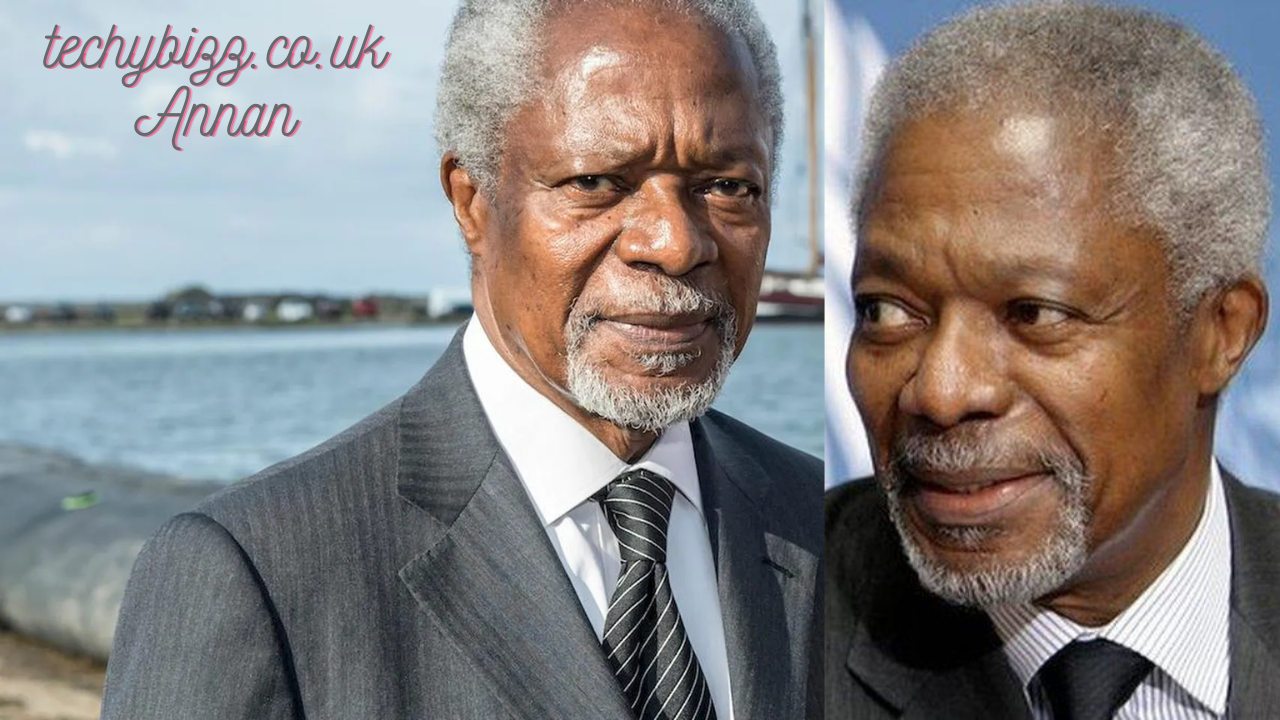
Kofi Annan’s Early Life and Education
Kofi Annan was born on April 8, 1938, in Kumasi, Ghana, and later became one of the most influential figures in international diplomacy. He studied economics at Macalester College in the United States before continuing his education in Geneva and earning a master’s degree in management from the Massachusetts Institute of Technology. His early education helped develop the analytical, administrative, and international perspective that would shape his long career with the United Nations. Annan joined the UN system in 1962 and gradually gained experience across several departments, building the professional foundation that eventually led him to the organization’s highest leadership position.
Annan’s Rise Through the United Nations
Kofi Annan’s rise through the United Nations was the result of decades of experience in administration, diplomacy, and international affairs. After joining the UN system in 1962, he worked in several roles and locations, gaining valuable knowledge of the organization’s internal operations and its work in different parts of the world. His career gradually moved toward increasingly important responsibilities, particularly in peacekeeping and humanitarian affairs. Annan became widely respected for his calm approach, diplomatic communication, and ability to work with officials from different countries and political backgrounds.
A major turning point came when Annan took on senior leadership responsibilities within the UN Department of Peacekeeping Operations. His experience in managing difficult international situations helped strengthen his reputation as a capable diplomat and administrator. In 1996, he was selected to become the seventh Secretary-General of the United Nations, making history as the first person from the UN’s professional staff to rise to the position. His appointment marked the beginning of a new chapter in which Annan would become a prominent voice on peace, security, development, and international cooperation.
Leadership as UN Secretary-General
As UN Secretary-General, Kofi Annan served from 1997 to 2006 and focused on strengthening international cooperation, promoting peace, and making the United Nations more effective. His leadership included efforts to address armed conflicts, humanitarian crises, poverty, and global development while encouraging countries to work through international institutions. Annan also supported reforms within the UN and placed greater emphasis on human rights and the rule of law. His tenure established him as a prominent figure in global diplomacy and helped make the name Annan closely associated with international peace and multilateral cooperation.
Peacekeeping and International Diplomacy
Kofi Annan played an important role in UN peacekeeping and international diplomacy, particularly during periods of serious conflict and political instability. Before becoming Secretary-General, he served as Under-Secretary-General for Peacekeeping Operations, where he was involved in managing complex international missions and supporting efforts to prevent conflicts from escalating. His diplomatic approach emphasized negotiation, cooperation, and the use of international institutions to address disputes.
During his time as Secretary-General, Annan continued to make peace and conflict resolution central to his work. He became involved in diplomatic efforts concerning conflicts in Africa, the Middle East, and other regions, often encouraging governments to pursue peaceful solutions. His work demonstrated both the possibilities and limitations of international diplomacy, particularly when powerful governments disagreed over how the United Nations should respond to a crisis. Through these efforts, Annan became recognized as an important international mediator and advocate for multilateral action.
Human Rights and Global Development
Kofi Annan placed human rights and global development at the center of his vision for the United Nations. He argued that peace, security, development, and respect for human dignity were closely connected, encouraging international cooperation to address poverty, inequality, disease, and humanitarian crises. During his tenure, the UN also strengthened its focus on development goals and international partnerships. Annan consistently emphasized that the international community had a responsibility to protect human rights and improve living conditions, helping establish these issues as important parts of the UN’s broader global agenda.
The 2001 Nobel Peace Prize
In 2001, Kofi Annan and the United Nations were jointly awarded the Nobel Peace Prize for their work toward a better organized and more peaceful world. The Nobel Committee recognized Annan’s contribution to revitalizing the UN and giving greater importance to human rights, humanitarian concerns, and international cooperation. The award represented a major recognition of his efforts to strengthen the role of the United Nations at a time when global conflicts and humanitarian challenges required greater international coordination.
The Nobel Peace Prize also reinforced Annan’s reputation as a leading voice in global diplomacy. Rather than presenting peace as the responsibility of individual governments alone, he consistently emphasized the importance of collective action through international institutions. His Nobel recognition highlighted the broader significance of the UN’s work and reflected Annan’s belief that cooperation between nations was essential for addressing problems that crossed national borders.
Challenges and Controversies in Annan’s Career
Kofi Annan’s career also included significant challenges and controversies, particularly surrounding the United Nations’ responses to major international crises. His leadership faced criticism over the UN’s handling of the Rwanda genocide and the Srebrenica massacre, while the Oil-for-Food Programme in Iraq later became another major source of controversy for the organization. Annan acknowledged serious shortcomings within the UN and supported investigations and reforms intended to improve accountability. These difficult episodes demonstrated the limitations faced by international institutions when member states disagree or fail to act decisively, while also adding complexity to the historical assessment of Annan’s leadership.
Kofi Annan’s Lasting Legacy
Kofi Annan left a lasting mark on international diplomacy, peacekeeping, human rights, and global development. After completing his second term as UN Secretary-General in 2006, he continued working on international issues through the Kofi Annan Foundation and other diplomatic initiatives. He also served as the UN-Arab League Joint Special Envoy for Syria in 2012, attempting to help find a peaceful political solution to the conflict. His continued involvement demonstrated his commitment to negotiation and international cooperation even after leaving the UN’s highest office.
Annan died on August 18, 2018, in Bern, Switzerland, at the age of 80, but his influence remains visible in discussions about multilateralism and the role of international organizations. His career showed both the potential and limitations of diplomacy, particularly when international cooperation is tested by war, political disagreements, and humanitarian emergencies. For many observers, Annan remains remembered as a significant global statesman who promoted dialogue, human rights, and collective action throughout his public life.
Conclusion and Frequently Asked Questions
Kofi Annan’s journey from Ghanaian student to United Nations Secretary-General and Nobel Peace Prize laureate made the name Annan closely associated with global diplomacy and international cooperation. His career covered peacekeeping, human rights, development, humanitarian affairs, and conflict resolution, while his leadership also faced serious challenges and criticism. Despite those complexities, his commitment to multilateralism and dialogue remained central to his public life. Annan’s legacy continues to influence discussions about the responsibilities of international institutions and the importance of cooperation between nations.
FAQs
Who was Kofi Annan?
Kofi Annan was a Ghanaian diplomat who served as the seventh Secretary-General of the United Nations from 1997 to 2006.
When did Kofi Annan win the Nobel Peace Prize?
Kofi Annan and the United Nations jointly received the Nobel Peace Prize in 2001.
What was Kofi Annan known for?
He was known for his work in international diplomacy, peacekeeping, human rights, humanitarian affairs, and global development.
When did Kofi Annan die?
Kofi Annan died on August 18, 2018, in Bern, Switzerland, at the age of 80.