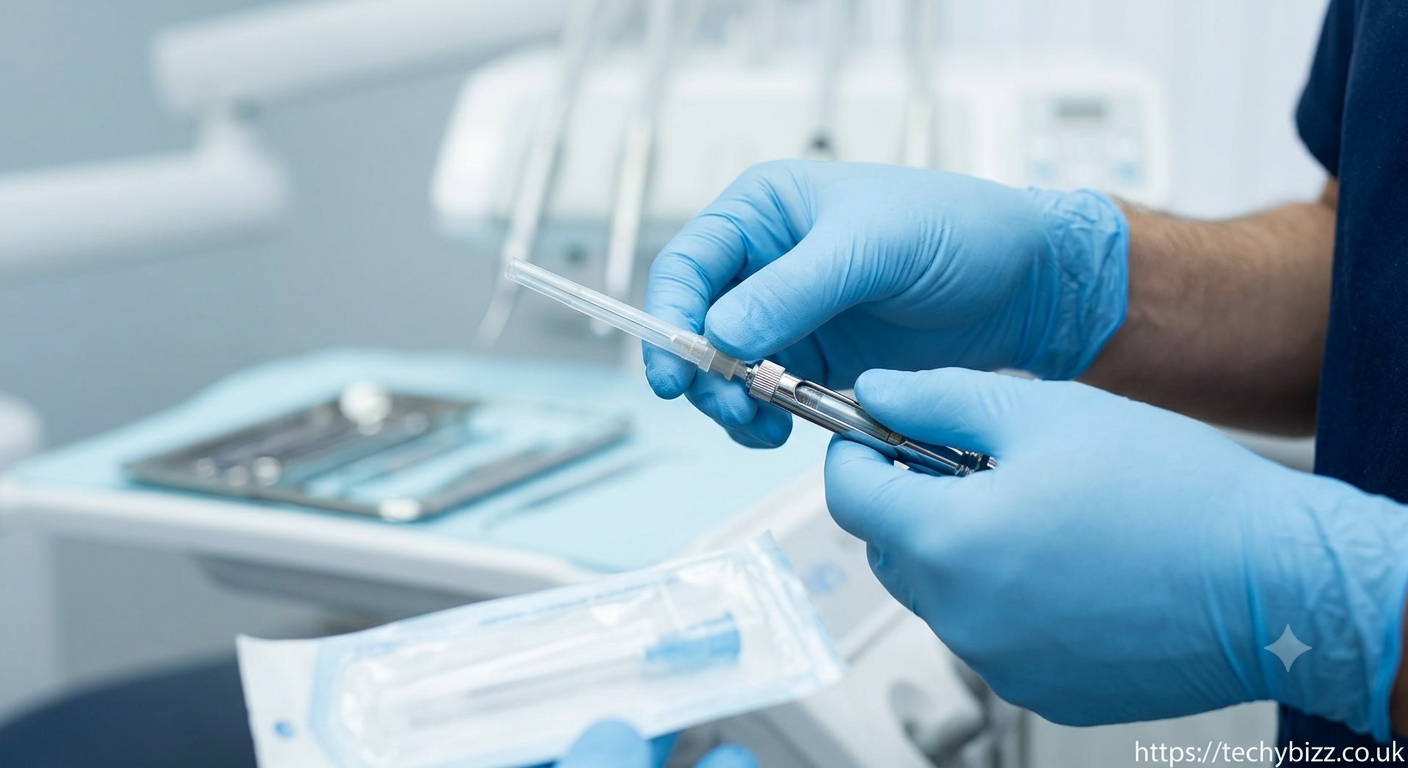
A dentist needle is a specialized dental instrument used to deliver local anesthesia before procedures such as tooth fillings, root canals, tooth extractions, and other treatments that may cause discomfort. Although many people feel nervous when they see a needle at the dentist’s office, this small instrument plays an important role in making dental care more comfortable. It allows the dentist to administer anesthetic medication near specific nerves, temporarily reducing the sensation of pain while the patient remains awake.
Modern dentistry uses different types and sizes of dental needles depending on the treatment area, the patient’s needs, and the method of anesthesia. Dentists also use techniques designed to reduce discomfort, including applying a topical numbing gel before an injection. Understanding how a dentist needle works, why it is used, and what patients can expect can help reduce anxiety and make dental visits less stressful.
What Is a Dentist Needle?
A dentist needle is a thin, sterile, single-use needle designed to deliver anesthetic medication into the tissues of the mouth. It is generally attached to a dental syringe that holds a cartridge of local anesthetic. The dentist carefully positions the needle and administers the medication to numb the nerves responsible for transmitting pain signals.
Unlike needles used for many other medical injections, dental needles are specifically designed for the anatomical structures of the mouth and jaw. Their length and diameter vary according to the procedure and the injection technique. The dentist selects an appropriate needle based on the treatment location and the patient’s clinical needs.
The needle is only one part of the anesthesia system. The syringe delivers the medication, the cartridge contains the anesthetic solution, and the dentist’s technique helps ensure that the medicine reaches the intended area. According to the American Dental Association, safe anesthesia practice involves appropriate equipment, medication selection, and attention to patient safety.
Why Do Dentists Use Needles?
The primary purpose of a dentist needle is to administer local anesthesia so patients can undergo dental treatment with less pain. Procedures involving tooth decay, damaged teeth, infected dental pulp, or oral surgery may require numbing medication to improve comfort.
For example, a dentist may inject anesthetic near a tooth before removing decay and placing a filling. During a root canal, local anesthesia helps control pain associated with treating the inside of the tooth. For a tooth extraction, it helps numb the tooth and surrounding tissues before removal.
Dental injections can also be useful when treating certain gum conditions or performing surgical procedures. The specific injection method depends on the location of the treatment and the nerves that need to be blocked. Local anesthesia does not normally make a patient unconscious; the patient generally remains awake and can communicate with the dentist throughout the procedure.
Types of Dentist Needles


9
Dentists use different needle lengths and gauges to meet the requirements of various dental procedures. The choice depends on the patient’s anatomy, the injection technique, and the treatment being performed.
Short Dental Needles
Short dental needles are commonly used for certain injections near the teeth and surrounding tissues. They can be suitable for local infiltration, in which anesthetic is placed near the smaller nerve endings supplying a particular area.
These needles may be used for selected procedures involving upper teeth or other locations where a shorter needle is appropriate. However, the dentist must assess the treatment site before selecting the needle.
Long Dental Needles
Long dental needles are often used for certain nerve-block injections, particularly when anesthetic must be delivered near a major nerve supplying part of the lower jaw.
A nerve block can numb several teeth or a larger region rather than a single tooth. The appropriate needle length depends on the patient’s anatomy and the intended injection technique. A long needle is not automatically better or more effective; correct selection and professional technique are essential.
Needle Gauge and Thickness
Dental needles are available in different gauges. Gauge numbers work inversely to diameter: a higher gauge number generally indicates a thinner needle.
Needle diameter can affect handling and the behavior of the needle during injection. However, thinner does not always mean less painful. Discomfort also depends on tissue sensitivity, injection speed, needle placement, and whether topical anesthetic is used.
Patients do not need to select their own dental needle. The dentist chooses an appropriate, sterile needle for the procedure and follows professional infection-control practices.
How Does a Dentist Needle Work?
The process usually begins with a dental examination and a discussion of the planned treatment. The dentist asks about medical conditions, medications, allergies, and any previous reactions to local anesthesia. This information helps the dental professional select an appropriate anesthetic.
If needed, the dentist applies a topical anesthetic gel to the surface of the gum. This can reduce the sensation associated with the initial needle insertion, although it does not completely eliminate every sensation. The dentist then uses a dental syringe to deliver the anesthetic into the appropriate tissue.
The medication temporarily blocks nerve signals that carry pain information to the brain. After allowing sufficient time for the anesthetic to work, the dentist checks whether the treatment area is adequately numb. Patients may still feel pressure, movement, or vibration during treatment, but sharp pain should be addressed promptly if it occurs.
Does a Dentist Needle Hurt?
One of the most common questions patients ask is whether a dentist needle hurts. The experience varies from person to person, but many patients describe the injection as a brief pinch, slight pressure, or mild stinging sensation.
Several factors can influence discomfort, including the sensitivity of the gums, anxiety, the injection site, and how quickly the anesthetic is administered. Some anesthetic solutions can cause temporary stinging as they enter the tissue.
Dentists may use several approaches to improve comfort:
- Topical numbing gel: Helps numb the surface of the gum before injection.
- Slow injection: Controlled delivery can reduce pressure and discomfort.
- Clear communication: Knowing what to expect may help reduce anxiety.
- Relaxation techniques: Slow breathing and short breaks can make the appointment easier.
- Sedation options: For patients with significant dental anxiety, an appropriate sedation method may be considered after clinical assessment.
If you are afraid of needles, tell your dentist before treatment begins. Dental professionals can explain the procedure and discuss available ways to make the experience more manageable.
Is a Dentist Needle Safe?
Dental needles are generally safe when used by qualified dental professionals with proper infection-control procedures and appropriate anesthesia practices. A new sterile needle should be used for each patient, and used needles must be handled and disposed of safely.
However, an injection is still a medical procedure, and complications are possible. Common temporary effects may include soreness, tenderness, or minor bruising around the injection site. Some patients experience dizziness or other temporary symptoms related to the anesthetic or the circumstances of the injection.
Rare complications can include allergic reactions, nerve-related symptoms, or systemic toxicity from local anesthetic medication. The dentist reduces risks by reviewing medical history, choosing an appropriate medication and dose, and following established clinical procedures.
Patients should tell the dentist about previous reactions to anesthetics, current medications, significant medical conditions, and pregnancy or possible pregnancy when relevant. If breathing difficulty, facial or throat swelling, or other severe symptoms occur after an injection, seek emergency medical assistance.
What Happens After a Dental Injection?
After the injection, the mouth may feel numb for several hours, although the duration varies according to the medication, dosage, injection site, and individual response. The lips, tongue, cheeks, or gums may feel unusually heavy or swollen even when no actual swelling is present.
During this period, patients should be careful when eating, drinking hot liquids, or chewing. Numbness can make it difficult to recognize accidental bites or burns. Follow the dentist’s instructions about eating and drinking after treatment.
Mild tenderness at the injection site may occur and generally improves. However, persistent or worsening numbness, unusual weakness, severe pain, or other concerning symptoms should be discussed with the dentist or another healthcare professional. Seek urgent medical care for signs of a serious allergic reaction.
Dentist Needle for Children
Children may feel particularly anxious about dental injections because they are unfamiliar with the procedure or worried about pain. A calm, supportive approach can help them feel more comfortable.
Before treatment, parents can explain that the dentist will use special medicine to help the tooth feel numb. It is generally better to avoid frightening descriptions or promises that the child will feel absolutely nothing. The dentist can explain the procedure in age-appropriate language and decide whether topical anesthetic or additional anxiety-management methods are appropriate.
The choice and amount of anesthetic for children must be based on factors such as age, weight, medical history, and the planned procedure. Parents should provide accurate information about the child’s medications, allergies, and previous medical reactions.
For children with significant fear, a dentist may discuss additional behavior-management or sedation options when clinically appropriate. These decisions require professional assessment and suitable monitoring.
How to Reduce Fear of a Dentist Needle
Fear of dental needles is common, and it should not prevent someone from receiving necessary dental care. Patients can take practical steps to make their appointments less stressful.
First, tell the dentist about your concerns when booking the appointment or before treatment. Ask the dentist to explain the injection process and agree on a signal you can use if you need a pause. Slow breathing, listening to music if permitted, and focusing on a comfortable point in the room may also help.
If needle anxiety is severe, ask whether topical anesthetic, other pain-control methods, or an appropriate sedation option is available. Not every method is suitable for every patient, so the dentist should explain the benefits, risks, and preparation requirements.
Most importantly, do not delay urgent dental treatment solely because you fear the injection. Untreated dental problems can become more complicated over time, and your dentist can work with you to find a suitable approach.
Frequently Asked Questions (FAQs)
What is a dentist needle used for?
A dentist needle is used to inject local anesthetic into tissues of the mouth so that dental procedures can be performed with less pain. It is commonly used for fillings, root canals, extractions, and selected oral surgical treatments.
Are dentist needles different from regular medical needles?
Yes. Dental needles are designed to work with dental syringes and anesthetic cartridges and to suit specific injection techniques used in the mouth. Their lengths and diameters vary according to clinical requirements.
Do dentists numb the gums before using a needle?
Many dentists apply a topical anesthetic gel before an injection. It can reduce surface sensitivity, but patients may still feel a brief pinch or pressure when the needle is inserted.
How long does dental anesthesia last?
The duration depends on the anesthetic, dose, injection site, and individual response. Numbness may last for several hours. Your dentist can explain what is expected for your particular treatment.
Can a dentist needle cause nerve damage?
Nerve-related complications are possible but uncommon. If numbness, tingling, weakness, or unusual pain continues longer than the dentist said to expect, contact the dental professional for assessment.
Can I eat after receiving a dental injection?
Follow your dentist’s instructions. While your mouth is numb, avoid chewing on the affected side and be cautious with hot foods and drinks to prevent accidental bites or burns.
What should I do if I am afraid of dental needles?
Tell your dentist about your fear. Topical anesthetic, clear explanations, relaxation techniques, and, in selected cases, sedation may help make treatment more comfortable.
Conclusion
A dentist needle is an important tool in modern dentistry because it allows dental professionals to deliver local anesthesia and perform many treatments more comfortably. Different needle sizes and injection techniques serve different clinical purposes, and the right choice depends on the patient’s anatomy and the procedure.
Although injections may cause brief discomfort, topical numbing agents, careful technique, and good communication can make the experience easier. Dental needles are generally safe when used by qualified professionals who follow proper sterilization, medication, and patient-care procedures.
If you are worried about a dentist needle, discuss your concerns before treatment. Understanding what happens during an injection and knowing which comfort options are available can help you feel more confident about maintaining your oral health.